Where to Stay in Nagoya: Nagoya Station, Sakae, or Fushimi?
A practical guide for international travelers on where to stay in nagoya sakae vs station, covering the best next steps, tradeoffs, and when to call a pro.
A practical guide for international travelers on where to stay in nagoya sakae vs station, covering the best next steps, tradeoffs, and when to call a pro.
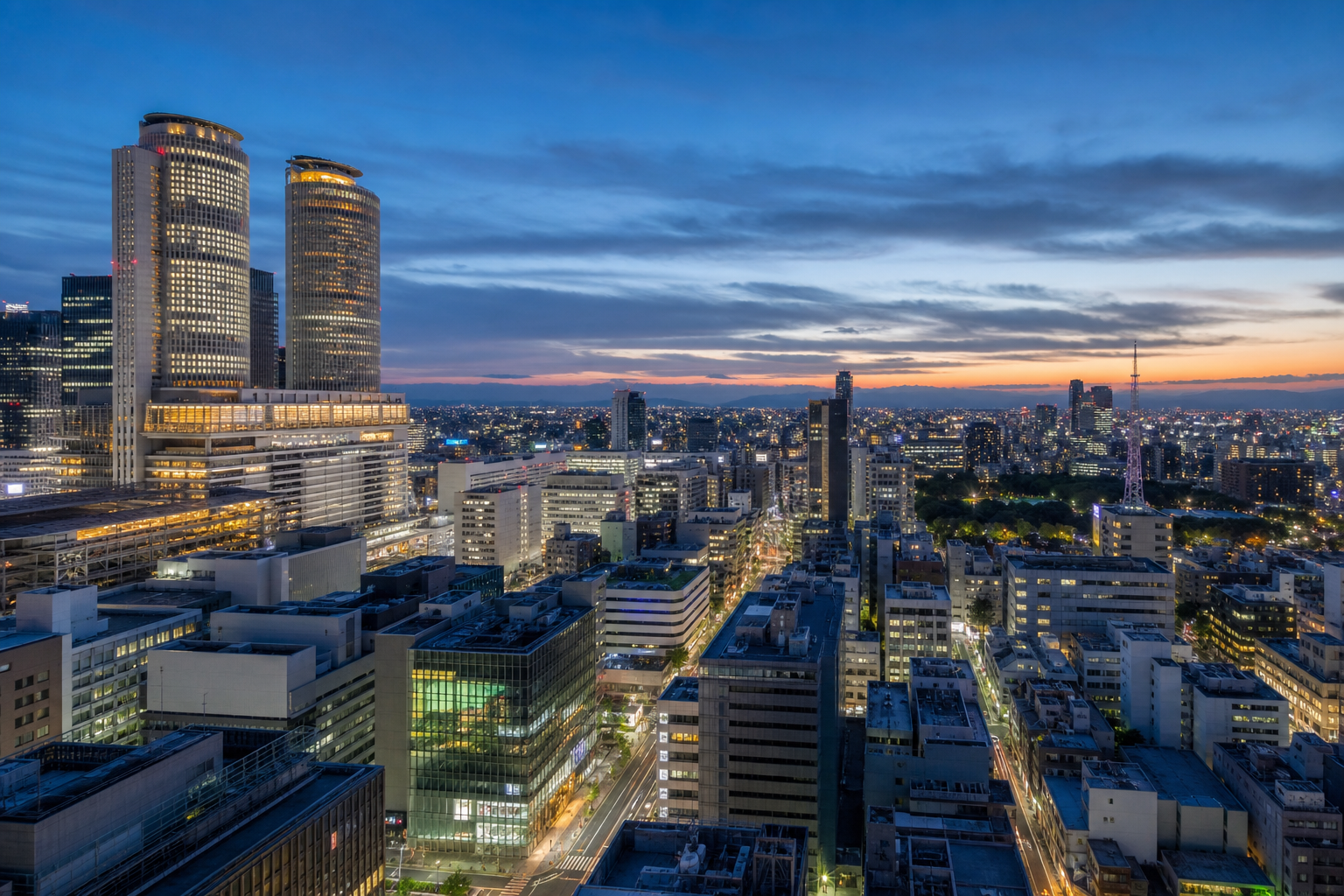
For a first visit, stay near Nagoya Station (Meieki) if you have an early Shinkansen, airport transfer, or several day trips. Choose Sakae if evenings, shopping, restaurants, and a more energetic city-centre atmosphere matter more than carrying luggage through a major rail hub. Choose Fushimi if you want the quietest compromise: one subway stop from Nagoya Station, one stop from Sakae, with museums and central streets within walking distance.
There is no universally best district. The useful question is which inconvenience you would rather avoid. Meieki minimizes regional transport friction; Sakae minimizes evening transit; Fushimi minimizes neither completely, but balances both. For most two-night first trips, Meieki wins. For three or more nights focused on central Nagoya, Sakae or Fushimi often feels easier after dinner.
> Last checked: August 1, 2026. Routes and district geography were checked against the Nagoya City Transportation Bureau, Nagoya official tourism accommodation directory, Meitetsu airport access information, and Chubu Centrair access guide. Hotel prices and availability change continuously; confirm the exact address, cancellation terms, room size, and station exit before paying.
The decision matrix
| Area | Best for | Skip if | Key transport logic | Evening character | Booking caveat |
|---|---|---|---|---|---|
| Nagoya Station / Meieki | First visits, Shinkansen, Centrair, day trips, heavy luggage | You want nightlife outside the hotel door or dislike large stations | Direct national and regional rail hub; Centrair trains use Meitetsu Nagoya | Busy around towers; quieter on some back streets | “Nagoya Station” can describe hotels well beyond an easy luggage walk |
| Sakae | Dining, shopping, nightlife, late central evenings | You have multiple early intercity departures or lots of luggage | Higashiyama Line to Nagoya; Meijo Line for several city sights | Most energetic of the three | Check whether the property is near Sakae, Yabacho, Hisaya-odori, or farther east |
| Fushimi | Couples, museum visits, business travel, a calm central base | You need a transport hub downstairs or maximum nightlife | Higashiyama Line between Nagoya and Sakae; Tsurumai Line interchange | Quieter, with restaurants but less late-night density | “Fushimi” listings may stretch toward Marunouchi or Osu; map the walk |
Editorial judgment: do not pay a large premium merely for a hotel to advertise “near Nagoya Station.” A genuinely convenient Meieki hotel should make your actual rail entrance manageable with luggage. If the walk is awkward, a Fushimi hotel close to a subway exit can be more useful than a nominal station hotel several blocks away.
A five-question area selector
Score one point for each statement. This is not a hotel-price calculator; it is a friction calculator.
Add a point to Meieki if…
1. You arrive from Tokyo, Kyoto, Osaka, or the airport and want the simplest final transfer.
2. Two or more days involve regional rail or bus departures.
3. You leave before breakfast on your final morning.
4. You have a large suitcase, stroller, or limited tolerance for transfers.
5. You are following our Nagoya one-day itinerary, then moving to another city.
Add a point to Sakae if…
1. You expect to eat, shop, or drink in the centre most evenings.
2. You prefer returning on foot rather than timing a final subway ride.
3. Oasis 21, Hisaya-odori, Yabacho, and central retail are priorities.
4. Your trip has few early departures.
5. You value street activity more than a quiet business district.
Add a point to Fushimi if…
1. You want one base for both Meieki and Sakae without staying inside either.
2. The Nagoya City Science Museum or art museums are priorities.
3. You prefer a calmer night environment.
4. A compact hotel near a subway exit costs less than equivalent Meieki or Sakae options.
5. You will walk in fair weather but want a quick subway fallback in rain.
If two areas tie, choose the hotel with the better cancellation policy, shorter verified walk to a station entrance, and room configuration that actually fits your party. Those details affect a trip more than a marginal neighbourhood advantage.
Nagoya Station (Meieki): best for moving through Chubu
Nagoya Station is not one simple concourse. JR conventional lines, the Shinkansen, Aonami Line, subway, Kintetsu Nagoya, and Meitetsu Nagoya occupy connected or adjacent facilities. That concentration is Meieki’s advantage—and the reason a map distance can mislead. A hotel on the wrong side of the complex may require a longer indoor route than expected.
Meieki route cards
Centrair to your hotel: follow official airport and Meitetsu guidance to Meitetsu Nagoya. After arrival, use your hotel’s stated exit and walking directions rather than assuming the JR side is correct. Travellers with heavy luggage should compare a short taxi from the station with a complicated indoor walk. See our detailed Centrair Airport to Nagoya guide before choosing a late-arrival hotel.
Shinkansen morning: select a property whose map route ends at the Shinkansen side or has a clear indoor connection. Build at least 15 extra minutes into your first attempt to cross the station; more if you must collect tickets, food, or reserved-seat changes. Verify the departure in an official rail planner.
Sakae evening: take the Higashiyama Line between Nagoya and Sakae. The ride itself is short, but total door-to-door time includes finding the subway, reaching the correct platform, waiting, and walking from the Sakae exit. If you expect to make that return every night, the station advantage begins to shrink.
Who should avoid Meieki?
Avoid it when your whole trip is central shopping and dining, especially if the chosen property is outside the immediate station grid. The district is active, but its experience is more vertical—station malls, towers, underground passages—than Sakae’s broader evening streets. Also reconsider Meieki if a cheaper “station” hotel requires an exposed 12- to 15-minute luggage walk.
Sakae: best for evenings and central-city energy
Sakae is Nagoya’s most practical choice for travellers who want the day to continue after attractions close. The area connects department stores, underground shopping, Hisaya-odori Park, Oasis 21, restaurants, and nightlife. Sakae Station serves the Higashiyama and Meijo lines, while nearby Hisaya-odori and Yabacho can be better reference points for some hotels.
Sakae route cards
From Nagoya Station: use the Higashiyama Line to Sakae. With luggage, confirm the accessible route and elevator location through the Transportation Bureau’s station information; the closest numbered exit is not always the easiest exit with bags. A taxi can be rational for a family or several suitcases, but road time is traffic-dependent.
For Atsuta and Meijo Line sights: Sakae’s interchange can reduce backtracking. Route planners may direct you through Kanayama or another interchange depending on the destination, so check the live route rather than memorizing one pattern.
For a late dinner: Sakae removes the need to return across town, but do not assume every restaurant stays open late or accepts walk-ins. Check the venue directly and keep a nearby second choice. If food is central to the trip, our best hitsumabushi in Nagoya guide explains queue and ordering tradeoffs.
Who should avoid Sakae?
Choose elsewhere if sleep sensitivity and nightlife noise are major concerns. Two hotels both labelled Sakae can have very different surroundings: one faces a commercial avenue, another sits near bars, and another is several blocks toward a quieter edge. Read recent reviews specifically for street noise, but treat individual complaints as clues, not guarantees. Meieki is also safer operationally for a very early Shinkansen because it removes the subway or taxi dependency.
Fushimi: the balanced base most visitors overlook
Fushimi sits between Nagoya Station and Sakae on the Higashiyama Line and also connects to the Tsurumai Line. It is the least dramatic recommendation, which is precisely its strength. You can reach either major centre quickly, walk to several cultural sites, and return to a district that usually feels calmer than Sakae.
The key tradeoff is immediacy. Fushimi is not the intercity hub, and it is not the nightlife core. You will make a small transfer or walk on many days. For a three-night trip with one day trip, one museum day, and one Sakae evening, that repeated small cost may still be lower than paying a Meieki premium or commuting from Sakae for every departure.
Fushimi route cards
Nagoya Station connection: take the Higashiyama Line one stop. For a party with several cases, compare the transfer burden with a short taxi. Never plan an exact taxi duration around rush hour.
Sakae connection: take the Higashiyama Line one stop or walk when weather, footwear, and mobility make it sensible. In heat, heavy rain, or after a long day, the subway is the more predictable choice.
Museum day: verify each venue’s closing day, timed-entry rule, and last admission on its official page. The science museum’s planetarium and general museum admission can have different availability; do not build a trip around assumed same-day access.
Who should avoid Fushimi?
Skip Fushimi if “walk outside and immediately have dozens of late options” is essential, or if every morning starts on an intercity train. It also demands careful map checking: a property marketed around Fushimi may be closer to another station or on a block that feels quiet at night.
Booking filters that prevent expensive mistakes
Use these filters before comparing star ratings or promotional discounts:
1. Map the exact entrance-to-hotel route. Search from a usable station exit, not the station’s centre pin.
2. Check room occupancy, not only bed count. Japanese room descriptions may distinguish adults, children sharing beds, and maximum occupancy.
3. Confirm luggage policy. Ask whether the hotel can hold luggage before check-in and after check-out, and whether overnight forwarding receipt is available. Do not assume.
4. Select free cancellation when plans are still moving. Compare the cancellation deadline in Japan time and identify whether payment is immediate or at the property.
5. Inspect bathroom and room size. A low rate can be poor value when open suitcases block circulation.
6. Filter for laundry only if you understand the setup. “Laundry” may mean coin-operated shared machines, not in-room facilities.
7. Verify breakfast hours against departures. Included breakfast has little value if you leave first.
8. Check accessible routing. Request details directly from the hotel and use official station accessibility information; do not infer step-free access from distance alone.
9. Read the full tax and fee breakdown. Compare the final payable total in the same currency and note any locally collected charges shown by the booking service.
10. Save the Japanese address and phone number. They help a taxi driver or station staff identify the correct property.
Affiliate-safe rule: use hotel search platforms to compare inventory, but verify important conditions on the property’s own site or by contacting it. A search result is not proof of current availability, renovation status, bed configuration, or quietness.
Sample choices by trip pattern
| Trip pattern | Area choice | Why | Sensible fallback |
|---|---|---|---|
| Arrive Centrair at night; Kyoto next morning | Meieki | Fewest transport decisions | Airport hotel if arrival disruption would threaten the connection |
| Three nights, shopping and dining every evening | Sakae | Less late commuting | Fushimi near the Higashiyama Line for quieter nights |
| Two museums, one day trip, one Sakae night | Fushimi | Balanced central access | Meieki if the day trip departs very early |
| Family with stroller and large luggage | Meieki, exact accessible route verified | Reduces transfers | Taxi-accessible Fushimi hotel with confirmed room capacity |
| Four-night regional base for Takayama and other trips | Meieki | Better departure resilience | Kanayama only if its specific rail links fit the plan |
For a regional base, test each planned departure before booking. Our Takayama day-trip guide demonstrates why an early start and return margin matter; the same logic applies when deciding whether a central nightlife base is worth an extra morning transfer. For a longer city stay, compare the district choice against your actual plan in this three-day Nagoya itinerary.
Common mistakes, disruptions, and safety
Booking the district name instead of the address. Labels on hotel platforms are broad. Pin every candidate on a map and test the route to the relevant station entrance.
Treating subway ride time as door-to-door time. Station navigation, waiting, exits, and hotel walking can turn a short ride into a meaningful transfer. Add margin, especially on departure day.
Assuming the last train will save the evening. Service patterns and final departures vary by line and day. Use the official Nagoya route planner on the day, and budget for a taxi rather than gambling on an unverified last train.
Ignoring weather. Summer heat, heavy rain, and typhoon-related disruption can make a normally easy walk unpleasant or unsafe. Keep a subway or taxi fallback, follow official weather and operator notices, and do not force a transfer during severe warnings.
Leaving luggage unattended. Use hotel storage, staffed counters, or lockers according to posted rules. Keep passports, medication, money, and irreplaceable items with you.
Check your government’s current travel advisory before departure and save your nearest embassy contact. Nagoya is generally navigable for visitors, but normal city precautions apply in busy nightlife streets and stations: keep valuables controlled, know your route home, and do not follow aggressive touts. For an emergency call police at 110 or ambulance/fire at 119. Travellers needing consular support should use their embassy or consulate’s official Japan contact page; accommodation staff can help identify an appropriate local service.
FAQ
Is it better to stay near Nagoya Station or Sakae?
Nagoya Station is better for airport access, Shinkansen travel, day trips, early departures, and heavy luggage. Sakae is better for shopping, dining, nightlife, and central evenings. Choose according to the hardest transfer in your itinerary, not a generic ranking.
Is Fushimi a good place for first-time visitors?
Yes, particularly for visitors who want a quiet, central compromise. It is between Nagoya and Sakae on the Higashiyama Line and is useful for museum access. It is less convenient than Meieki for repeated intercity departures and less lively than Sakae at night.
How many nights should I stay in Nagoya?
Two nights can cover a compact city introduction; three nights allow a less rushed city plan or one day trip. Stay longer if Nagoya is your base for multiple Chubu excursions. Your district choice matters more as the number of early departures increases.
Should I book a hotel connected to Nagoya Station?
It can be worth paying more for an early departure, late arrival, poor weather, or mobility needs. Verify what “connected” means, which railway area it reaches, and whether the route is step-free. A nearby hotel with an awkward crossing may not deliver the expected benefit.
Can I walk between Nagoya Station, Fushimi, and Sakae?
Some travellers can walk these central corridors, but luggage, heat, rain, mobility, and time change the answer. Treat walking as an optional fair-weather connection and the Higashiyama Line as the reliable fallback. Check your exact hotel rather than using the district centre.
Which area is cheapest?
There is no consistently cheapest district. Event dates, weekdays, room type, cancellation terms, and booking lead time can outweigh location. Compare final totals for the same dates and conditions, then apply the transport-friction test above.
Final recommendation
Pick Meieki when your itinerary points outward, Sakae when it points into the evening city, and Fushimi when it points both ways. Then ignore the neighbourhood reputation for ten minutes and inspect the exact hotel: station exit, luggage route, room occupancy, cancellation deadline, and final price. That small audit is what turns a fashionable area choice into a practical base.