Donichi Eco Kippu Nagoya: Price, Rules and Worth-It Calculator
Use current ¥620/¥310 prices, covered-route rules and five break-even tests to decide whether Nagoya’s Donichi Eco Kippu fits your itinerary.
Use current ¥620/¥310 prices, covered-route rules and five break-even tests to decide whether Nagoya’s Donichi Eco Kippu fits your itinerary.
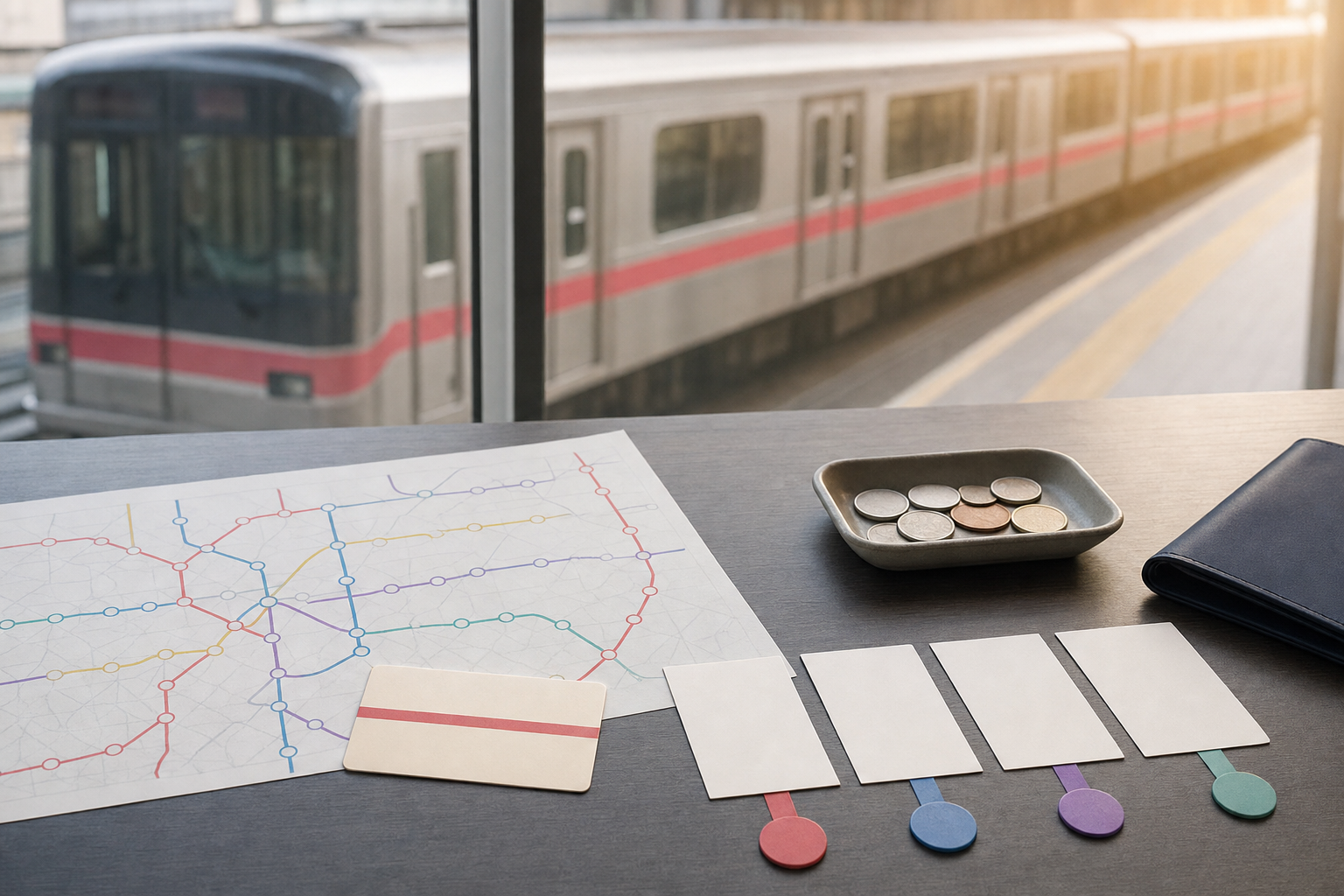
The Donichi Eco Kippu costs ¥620 for adults and ¥310 for children and gives unlimited rides on Nagoya City Subway and Nagoya City Bus for one eligible calendar day. It is sold for Saturdays, Sundays, Japanese public holidays and the 8th of every month. Those prices and rules were checked against the Nagoya City Transportation Bureau and Visit Nagoya on August 3, 2026.
The pass is easy to misunderstand. It is not valid on every train shown in a Nagoya route search, it does not cover the airport railway, and it is not a rolling 24-hour product. Its strongest use case is a city day with at least three or four separate municipal rides—Nagoya Station, Nagoya Castle, Sakae and Osu, for example. A simple return trip may still be cheaper with an IC card.
Use the calculator and itinerary tests below before buying.
Current price and rules at a glance
| Rule | Current official position |
|---|---|
| Adult price | ¥620 |
| Child price | ¥310 |
| Eligible dates | Saturdays, Sundays, Japanese public holidays and the 8th of each month |
| Validity period | One service/calendar day, not 24 hours from activation |
| Included | Nagoya City Subway and Nagoya City Bus |
| Not included | JR, Meitetsu, Kintetsu, Aonami Line, Linimo, airport trains, highway buses and other private operators |
| Best value pattern | Several separate municipal rides across two or more districts |
| Attraction admission | Not included; a valid pass can unlock separate benefits at participating facilities |
Current-source box — checked August 3, 2026
- Nagoya City Transportation Bureau ticket page: Donichi Eco Kippu price, other one-day products and purchase points.
- Visit Nagoya transport guide: eligible dates, ¥620/¥310 prices and city-bus/subway scope.
- Nagoya Toku Navi: current participating-facility benefits for valid day-ticket holders.
- Visit Nagoya Me~guru guide: current sightseeing-bus fare and accepted one-day ticket types.
- Nagoya Norikae Navi: official route and fare lookup before travel.
Recheck these pages on the travel date. Fares, benefits, sales channels and service arrangements can change.
Donichi versus Nagoya’s other day tickets
The Donichi product is not the only unlimited ticket. The right alternative depends on the date, operators and whether a late start needs rolling 24-hour validity.
| Product | Adult | Child | Main coverage | Time rule | Choose it when |
|---|---|---|---|---|---|
| Donichi Eco Kippu | ¥620 | ¥310 | City Subway + City Bus | Eligible calendar/service day | Eligible date and several city rides |
| Subway & City Bus One-Day Ticket | ¥870 | ¥430 | City Subway + City Bus | Calendar/service day | Ordinary weekday with enough mixed rides |
| Nagoya Subway 24-Hour Ticket | ¥760 | ¥380 | Subway only | 24 hours from first gate use | Subway-heavy plan crossing two dates/times |
| City Bus One-Day Ticket | ¥620 | ¥310 | City Bus only | Calendar/service day | Bus-only plan where unlimited rides pay off |
| IC card/pay as you go | Actual fares | Actual fares | Operator depends on card acceptance | Per ride | Light itinerary or many non-municipal segments |
On an eligible date, the Donichi pass costs less than both the regular ¥870 bus-and-subway day ticket and the ¥760 subway 24-hour ticket. That does not automatically make it cheaper than individual fares. If you only ride twice, calculate first.
The 24-hour subway ticket has one meaningful advantage: its clock runs for 24 hours from first use. A traveler starting at 17:00 and riding again the next morning may get more usable time from it. Donichi expires with the eligible service day rather than at the same time tomorrow.
For card compatibility and top-up rules, use the manaca versus Suica versus ICOCA guide. (manaca vs suica vs icoca nagoya)
What the pass covers—and the operator trap
Donichi covers all Nagoya municipal subway lines and Nagoya City Bus routes. It works well for municipal trips among Nagoya Station, Fushimi, Sakae, Nagoyajo, Osu, Kanayama, Atsuta and Higashiyama.
It does not cover every route inside Nagoya. A route planner may select a faster private service even when both endpoints look local. Budget separately for:
- JR Central trains;
- Meitetsu trains, including the main rail link to Chubu Centrair;
- Kintetsu trains;
- the Aonami Line;
- Linimo;
- highway and private buses;
- other services not explicitly identified as Nagoya City Subway or Nagoya City Bus.
Read the operator label for every segment, not only the station names. If the app says JR, Meitetsu, Kintetsu, Aonami or Linimo, the Donichi pass does not erase that fare.
Me~guru sightseeing bus
Visit Nagoya’s current guide says the Weekend Eco Ticket is accepted on Me~guru. Its normal single fare is listed as ¥210 for adults and ¥100 for children. Service days, operating hours and disruptions can change, so check the official Me~guru page before building the day around it.
Airport journeys
The pass does not include the main Meitetsu airport rail journey. A Centrair arrival or departure fare remains separate. Use the Centrair to Nagoya route comparison for the airport segment, then start the Donichi calculation only after entering the municipal network.
Worth-it calculator
Use actual fares from Nagoya Norikae Navi or the ticket-machine fare map. The official adult subway fare bands are ¥210, ¥240, ¥270, ¥310 and ¥340. A standard City Bus ride is generally ¥210 for an adult; the official bus page notes exceptions such as late-night service. Child fares are lower and should be read from the official result rather than estimated from the adult total.
Calculator formula
1. List every journey planned after entering Nagoya’s municipal network.
2. Remove JR, Meitetsu, Kintetsu, Aonami, Linimo and other uncovered segments.
3. Write the official individual fare beside each covered journey.
4. Apply any IC-card transfer discount shown by the official planner.
5. Add the remaining pay-as-you-go fares.
6. Subtract ¥620 per adult or ¥310 per child.
Savings = covered pay-as-you-go total − pass price
- Positive result: Donichi is cheaper by that amount.
- Zero: costs are equal; choose based on flexibility.
- Negative result: pay as you go is cheaper.
Do not multiply one pass across a group. Each traveler needs a separate valid ticket.
Quick adult thresholds
| Planned municipal rides | Minimum possible subway total | Donichi result |
|---|---|---|
| 1 | ¥210 | Pay as you go is cheaper by at least ¥410 |
| 2 | ¥420 | Usually pay as you go; two long ¥310–¥340 rides can exceed ¥620 |
| 3 | ¥630 | Break-even begins even at three minimum-fare subway rides |
| 4 | ¥840 | Pass saves at least ¥220 before any special transfer discount |
| 5 | ¥1,050 | Pass saves at least ¥430 before any special transfer discount |
Three standard adult City Bus rides total ¥630, only ¥10 above the pass. Four total ¥840, a clearer ¥220 saving. If an eligible manaca transfer discount applies between specific services, use the discounted official total rather than these simple multiplication examples.
Child threshold
Do not reuse the adult ride count blindly. The child pass is ¥310, while some child subway or bus fares are around ¥100 at the low end. Three low-fare rides can total about ¥300 and remain slightly cheaper individually; four can reach about ¥400. Enter the actual child fares shown by the official planner.
Itinerary break-even tests
These tests deliberately avoid claiming a fixed point-to-point fare that may change. They use the current minimum adult subway fare, so the conclusion remains conservative. Confirm the actual route fare before travel.
Test 1: Nagoya Station return trip only
Plan: Nagoya Station → one central district → Nagoya Station.
This is two rides. At the minimum adult subway fare, the total is ¥420, so Donichi would cost ¥200 more. It only breaks even if the two actual fares together exceed ¥620—for example, two long-distance municipal subway rides at ¥310 or ¥340 each.
Decision: Usually use an IC card for a simple central return trip.
Test 2: Castle, Sakae and Osu circuit
Plan:
1. Nagoya Station → Nagoyajo;
2. Nagoyajo → Sakae;
3. Sakae → Osu Kannon;
4. Osu Kannon → Nagoya Station.
That creates four separate subway journeys. Even four minimum adult fares total ¥840. Against a ¥620 pass, the conservative adult saving is at least ¥220. Four low-end child fares around ¥100 total about ¥400, giving a conservative child saving around ¥90 against a ¥310 pass.
Decision: Donichi is a strong fit, provided every selected segment remains on the municipal subway.
Test 3: Atsuta plus central Nagoya
Plan:
1. Nagoya Station or hotel district → Atsuta area;
2. Atsuta area → Osu;
3. Osu → Sakae;
4. Sakae → hotel or Nagoya Station.
Again, four municipal rides put an adult above the pass price even if every subway segment were charged at the lowest fare. This itinerary also benefits from flexibility if weather changes the order.
Decision: Strong pass day. Check the exact station for Atsuta Jingu because route planners may offer JR or Meitetsu alternatives that are not covered.
Test 4: Higashiyama attraction plus one evening district
Plan: hotel → Higashiyama area → Sakae → hotel.
This is three rides. Three minimum adult subway fares equal ¥630, only ¥10 above Donichi, but longer segments can increase the saving. For a child, three low-end fares may remain below ¥310.
Decision: Adult pass is likely worthwhile; child pass requires exact fare entry. Admission fees remain separate.
Test 5: Airport arrival plus one city outing
Plan: Centrair → Nagoya Station by Meitetsu, then Nagoya Station → Sakae → Nagoya Station.
The Meitetsu airport fare is not covered. Only the two city rides enter the Donichi calculator. A late arrival also shortens the calendar-day value.
Decision: Usually pay as you go for the city rides. Do not count the airport fare toward break-even.
How to buy and use the ticket
The Transportation Bureau lists subway ticket machines, ticket-gate windows, station master offices and Transportation Bureau service centers among purchase points. Availability and payment acceptance can vary by machine or counter.
At a subway station
1. Confirm the date is eligible.
2. Switch the machine to English where available.
3. Open the one-day ticket menu.
4. Select Donichi Eco Kippu and the correct adult/child quantity.
5. Check the product and price before paying.
6. Keep any receipt separately from the magnetic ticket.
A ticket bought from a machine may already be tied to the day of purchase. An advance ticket receives its valid date when first inserted into a gate, according to the Transportation Bureau guide. Read the printed conditions for the exact ticket received.
At the gate and on buses
Insert the paper ticket into a subway gate and collect it from the exit slot. You need the same physical ticket for later journeys. On a bus, follow the vehicle’s instructions and show or insert the pass as directed.
Keep the ticket flat and dry. If it fails, do not force the gate or buy a replacement immediately. Use the staffed lane and show the physical pass.
Benefits at attractions
Nagoya Toku Navi lists discounts and other services for holders of valid Nagoya Transportation Bureau one-day tickets. Benefits are separate from transport coverage and can change by season, facility, exhibit or ticket type.
Treat a benefit as real only when:
- the facility appears in the current official guide;
- the pass is already valid on that date;
- the relevant admission product qualifies;
- the ticket is shown before payment where required.
Do not buy Donichi only for a benefit without comparing the admission saving and transport fares. A closed exhibit or ineligible combination ticket can remove the expected value.
Common mistakes
Calling it a 24-hour pass
Donichi is valid for the eligible service/calendar day. The subway-only ¥760 product is the one explicitly described as valid for 24 hours from first gate use.
Counting private-rail fares
Airport trains, JR, Kintetsu, Aonami and Linimo do not make Donichi reach break-even because those fares remain payable.
Assuming unlimited equals cheapest
Two central rides can cost only ¥420 at the minimum adult subway fare. Calculate first.
Forgetting IC transfer discounts
A simple fare-times-rides estimate can overstate pay-as-you-go cost when an eligible transfer discount applies. Use the official route result for the final comparison.
Choosing the fastest app result without checking operator
A route planner may prefer a private railway. If you want to stay within pass coverage, compare a municipal alternative and the extra travel time.
Losing the paper pass
A photograph is not a replacement for the magnetic ticket. Keep it until the final journey is complete.
Payment safety and disruption plan
Scam warning: buy from Transportation Bureau machines, staffed counters or another official channel. Ignore messages or unofficial sellers asking for card details, remote payment or a transfer to a private account. Donichi is a normal low-cost local ticket and does not require a reservation agent.
Before departure, check the Japan Meteorological Agency and the latest official transport notices. During a typhoon, earthquake, extreme heat or major disruption, follow station staff and do not enter closed platforms or railway areas.
For an immediate emergency in Japan, call 110 for police or 119 for fire and ambulance. For a serious passport or consular problem, use your government’s current travel advisory and embassy contact information. This is the practical risk check: official ticket channel, covered operator, live service status and a fallback IC-card balance.
FAQ
Is Donichi Eco Kippu available to tourists?
Yes. It is a public local-transport ticket, not a resident-only rail pass.
Is it valid every Friday?
No. Friday qualifies only when it is a Japanese public holiday or the 8th of the month.
Is the pass valid for 24 hours?
No. It is a one-day product. Choose the subway 24-hour ticket when rolling validity is more useful and buses are unnecessary.
Does it cover the Meitetsu airport train?
No. Pay separately for the Centrair segment.
Does it work on Me~guru?
Visit Nagoya’s current guide lists the Weekend Eco Ticket among accepted products. Recheck the service-day notice before travel.
Can two travelers share one pass?
No for travel together. Each person needs a valid adult or child ticket.
How many rides make it worthwhile?
For an adult, three minimum-fare subway rides total ¥630, just above the ¥620 pass. Four city rides create a clearer saving. A two-ride day needs exact fare checking.
Should children use the same threshold?
No. Three low child fares can remain below the ¥310 pass. Enter the actual child fares.
Does it include attraction entry?
No. Valid-pass benefits at participating facilities are separate discounts or services, not blanket admission.
Bottom line
Buy Donichi Eco Kippu when the date is eligible, the route stays mostly on Nagoya City Subway or City Bus, and the calculated covered fares exceed ¥620 per adult or ¥310 per child. Four separate municipal rides are the simplest strong-value pattern. A light two-ride day, a late airport arrival or an itinerary dominated by private rail usually favors pay as you go.
Check the operator for every segment, run the fare worksheet, and keep uncovered transport outside the calculation. That turns an “unlimited” pass into a measurable decision instead of an automatic purchase.