Which IC Card Should You Use in Nagoya? MANACA, Suica or ICOCA
Compare MANACA, Suica, ICOCA and TOICA in Nagoya, including local routes, top-up rules, cross-area limits and the best card for your trip.
Compare MANACA, Suica, ICOCA and TOICA in Nagoya, including local routes, top-up rules, cross-area limits and the best card for your trip.
If you already own a Suica, PASMO, ICOCA or another major interoperable Japanese transport IC card, bring it to Nagoya and use it. You normally do not need to buy MANACA just because Nagoya is your next city. If Nagoya is your first stop and you want a physical local card, MANACA is the most intuitive choice for Meitetsu, city subway and bus travel; TOICA is the JR Central-branded alternative. For a short visitor trip, the best card is usually the compatible card already in your wallet—not the one with the most local branding.
The important distinction is between card acceptance and journey validity. Major cards are mutually accepted across many urban transport networks, but that does not mean every long railway journey can be paid by tapping one card from start to finish. Area boundaries, Shinkansen travel, reserved-seat supplements and services outside the IC network still need separate attention.
For payment outside transport, combine your IC card with the backup setup in our Nagoya cash, cards and ATM guide. An IC balance is convenient electronic money, not a replacement for a bank card or emergency yen.
Last checked and official sources
Last checked: August 3, 2026. IC coverage, sale locations, mobile-wallet support, refund rules and ticket-machine payment methods can change. Check the operator page again shortly before travel.
Primary sources used for this guide:
- Meitetsu: official MANACA guide — local operators, card types, nationwide mutual acceptance, shopping and refund locations.
- JR Central: official TOICA purchase guide — purchase locations, current physical-card price, deposit and cash-only purchase rule.
- JR West: official ICOCA usage area — mutual-use networks and the warning about travel between different IC areas.
- Nagoya City Guide: getting around Nagoya — visitor-facing overview of MANACA on city transport and the TOICA area.
Meitetsu states that MANACA works on its trains and buses, Nagoya city subway and buses, the Aonami Line, Yutorito Line and Toyohashi Railway. It also says MANACA can be used in other participating transport IC-card areas nationwide. JR West’s official ICOCA guide lists MANACA and TOICA among the mutually accepted networks, while warning that cards cannot generally be used for a single journey crossing two different IC areas.
JR Central currently lists a physical TOICA purchase price of ¥2,000, made up of a refundable ¥500 deposit and ¥1,500 stored value, and says only cash is accepted for that purchase. Treat that as a TOICA-specific current fact, not proof that every card, machine or mobile wallet has identical terms.
Fast decision table: MANACA, Suica, ICOCA or TOICA?
| Your situation | Best practical choice | Why | Check before relying on it |
|---|---|---|---|
| You already have Suica, PASMO or ICOCA | Keep using it | Major cards are mutually accepted on participating Nagoya networks | Card validity, enough balance and whether your exact journey stays inside supported IC areas |
| Nagoya is your first city and you want a physical local card | MANACA | Natural fit for Meitetsu, subway, city buses and other local operators | Sale desk/machine hours, card type and current purchase/refund terms |
| Most of your local rail travel is on JR Central | TOICA | Issued for the JR Central area and widely interoperable | Purchase requires cash under JR Central’s current English guidance |
| You continue to Kyoto or Osaka | Existing ICOCA is fine in Nagoya; MANACA/TOICA works in participating Kansai networks | Mutual acceptance reduces the need for another card | Do not tap through a cross-area conventional-rail journey unless the operator confirms it is valid |
| You continue to Tokyo | Existing Suica is fine in Nagoya; MANACA/TOICA works in participating Tokyo networks | No need to collect a regional card for normal supported local trips | Long-distance and Shinkansen ticketing remain separate |
| You use a compatible iPhone wallet | Mobile Suica or ICOCA may be convenient | No physical card to carry and balance may be easier to monitor | Device region, wallet/card issuer support, foreign-card top-up behavior and battery backup |
| Your phone or foreign card is unreliable | Physical IC card plus yen backup | Keeps local transport independent of phone power and mobile top-ups | Store the card separately from contactless bank cards to prevent reader clashes |
Bottom line: MANACA, Suica, ICOCA and TOICA are not competing “passes” with radically different tourist fares. They are rechargeable stored-value cards. Pick based on what you already own, where you can buy or top up reliably, and which operator can help if something goes wrong.
Nagoya route cards: where tapping works and where to stop
Use these route cards as a planning filter, then verify the fare and service on the operating company’s site.
Centrair to central Nagoya
- Operator: Meitetsu.
- IC plan: A compatible MANACA, Suica, ICOCA or TOICA can handle the base stored-fare portion when accepted and sufficiently charged.
- Separate check: Some faster or reserved-seat products require an additional ticket or reservation. Do not assume the IC tap alone buys every premium seat product.
- Backup: Keep yen or another payment card ready at the airport. See the full Centrair-to-Nagoya transport guide.
Nagoya Station to Sakae or Osu
- Operator: Nagoya City subway, with possible walking or bus connection.
- IC plan: Tap the same compatible card at the entry and exit gates; for buses, follow the reader and boarding instructions shown by the operator.
- Decision: A stored-value card is usually simpler than buying separate single tickets for a flexible day.
- Alternative: Compare a day pass if you plan many city rides. An IC card charges individual fares; it does not automatically become an unlimited pass.
Nagoya to Kyoto, Osaka or Tokyo
- Operator mix: JR Central, JR West, JR East and/or Shinkansen services.
- IC plan: Use your card for supported local segments, not as automatic proof that the complete intercity journey is valid.
- Stop point: Buy the correct long-distance or Shinkansen ticket, or use an official reservation service that explicitly links a supported IC card.
- Safety rule: If a route planner crosses an IC-area boundary, ask station staff before entering rather than discovering at the exit gate that the trip cannot be settled normally.
Multi-stop day inside Nagoya
- Example: Nagoya Station → Sakae → Osu → hotel.
- IC plan: One card with enough balance simplifies transfers and avoids ticket-machine decisions at each ride.
- Budget check: Compare total expected individual fares with any relevant day pass before your first ride. Our one-day Nagoya itinerary helps estimate how many transport legs you will actually make.
Purchase, top-up and refund checklist
Buying a physical card
For MANACA, Meitetsu lists staffed stations and transport sales points for purchase and refund support. Non-registered MANACA can be used by anyone but cannot be reissued if lost; a registered card carries personal details and can be reissued under the operator’s conditions. A short-stay visitor normally values speed and simplicity, while a longer-term visitor may value loss protection.
For TOICA, JR Central says cards are sold at eligible ticket machines and ticket offices. Its current English page lists the ¥2,000 initial purchase described above and says the purchase is cash-only.
Before paying, confirm:
1. whether the machine sells a new card or only recharges one;
2. whether English instructions are available;
3. the deposit, initial stored balance and accepted payment method;
4. whether you are buying an adult, child, registered or unregistered product;
5. which operator handles refunds before you leave Japan.
Recharging
Assume that a physical IC-card machine may require yen cash unless the machine clearly offers another supported method. Do not build your first-day plan around an overseas credit-card top-up that you have not tested. Charge a small practical amount, confirm one successful gate tap, then add more as needed.
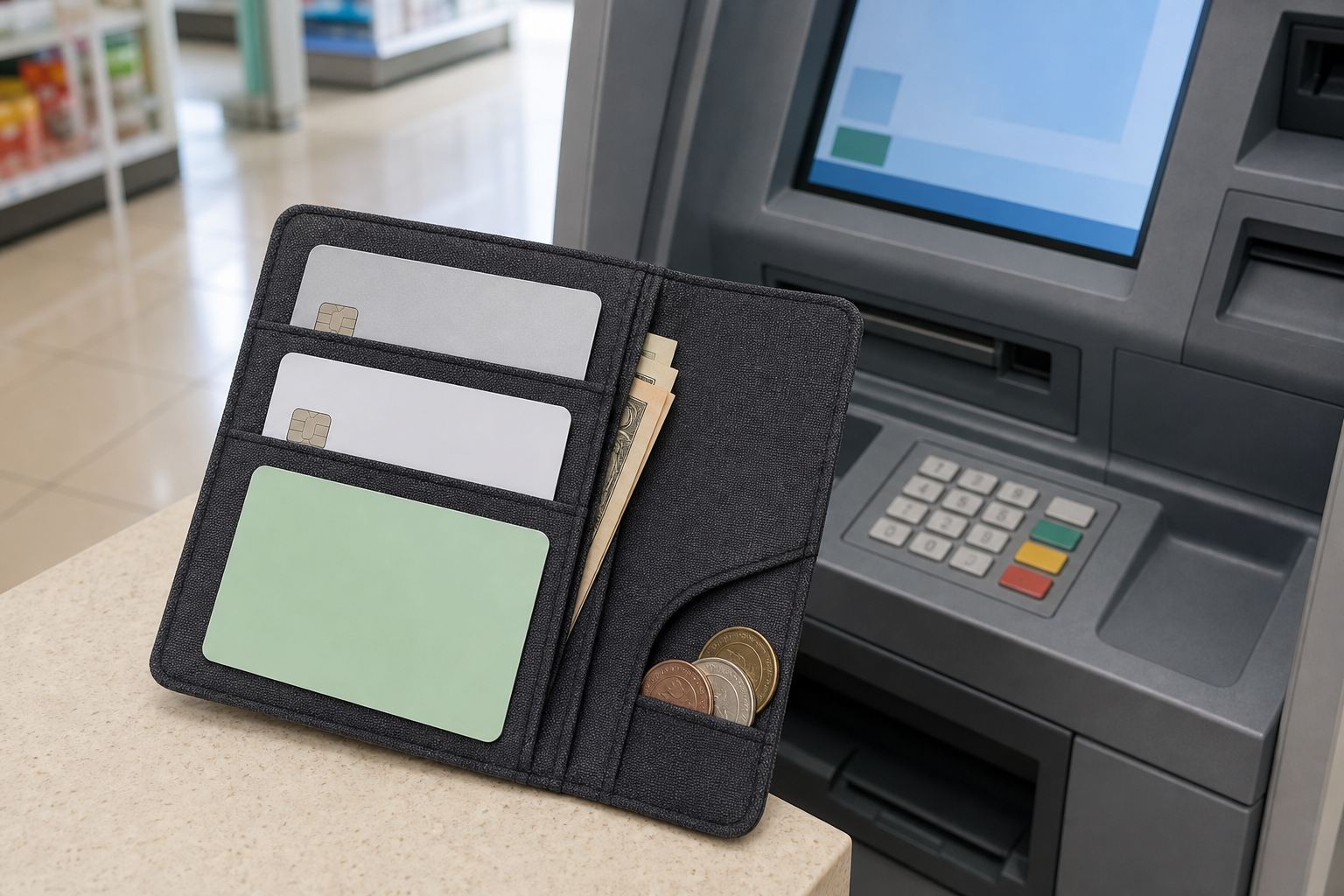
To avoid reader errors, take the IC card out of a wallet that also contains contactless bank cards. Touch one card flat to the reader and wait for the balance/fare confirmation. If the gate closes or the reader beeps unexpectedly, step aside and show the card to station staff; do not repeatedly force the same tap.
Refunds and leftover balance
Refunds are generally handled by the issuing operator rather than any operator that merely accepts the card. Meitetsu publishes its own MANACA refund locations, while JR Central handles TOICA services. A Suica or ICOCA accepted in Nagoya does not become a MANACA product that Meitetsu must refund.
Before refunding, compare the remaining balance, any handling charge, the refundable deposit and the time needed to find an eligible staffed counter. For a small remaining balance, spending it at a participating shop may be more practical than making a special trip—but acceptance must be confirmed at the register.
Simple top-up calculator
Use this planning formula instead of loading a large amount immediately:
Recommended starting balance = expected local rides + planned small IC purchases + one missed-connection reserve
| Input | How to estimate it |
|---|---|
| Expected local rides | Count the train, subway and bus legs in your itinerary, then check current fares in the operator’s planner |
| Small IC purchases | Include only shops, lockers or vending machines you reasonably expect to use and that display a compatible mark |
| Reserve | Add enough for one extra local ride back toward your hotel or a staffed major station |
| Existing balance | Subtract the usable balance already on your card |
| Round-up amount | Round to a recharge denomination offered by the machine rather than forcing an exact theoretical number |
Example method: if your itinerary has six local legs, price those six legs from current operator information, add any planned IC purchase and one extra local fare, then subtract your existing balance. The result is your first top-up—not a recommendation to store your full trip budget on the card.
This approach limits stranded balance and keeps loss exposure lower. Store accommodation details from our where-to-stay guide so the reserve is tied to a real return route, not a random yen figure.
What an IC card does not cover automatically
An IC card is convenient, but it is not universal transport permission.
- Shinkansen: A normal tap of stored value is not automatically a Shinkansen ticket. Use the appropriate ticket or official linked reservation product.
- Reserved or premium seats: A base fare and a seat/limited-express supplement may be separate.
- Cross-area conventional rail: Major cards can work inside participating areas but may not settle one continuous trip across different IC areas.
- Rural or unsupported services: Some buses, rail sections, taxis and attractions remain cash-, ticket- or reservation-based.
- Unlimited passes: MANACA or Suica stored value does not automatically apply a subway day-pass cap.
- Refund service: Mutual acceptance does not mean every operator can refund or reissue every brand.
- Phone top-ups: Mobile wallet support does not guarantee that every foreign-issued bank card will fund it reliably.
The safe workflow is to check the operator, fare product and route boundary—not just whether a familiar IC logo appears somewhere on a map.
Card failure and safety plan
Keep the following recovery plan:
- one physical IC card or a tested mobile card;
- enough yen for at least one local ticket;
- one physical bank card stored separately;
- a screenshot or note of your hotel name and nearest station;
- enough phone battery to show a reservation, but not total dependence on the phone;
- the card’s identifying number photographed or recorded privately if the issuer requires it for support.
Scam warning: never hand your phone, PIN or unlocked payment wallet to a stranger offering to “fix” a top-up. Use staffed ticket offices, official machines and operator support. If a gate or machine retains a ticket or displays an unresolved error, ask staff before starting a second transaction that could create duplicate charges.
For a lost unregistered MANACA, Meitetsu warns that it cannot be reissued. Registered products have different recovery conditions. That distinction matters more than brand loyalty if you are staying in Nagoya for weeks rather than days.
FAQ
Can I use Suica in Nagoya?
Yes, on participating Nagoya networks that accept the nationwide interoperable transport IC cards. Confirm your specific route, ensure the card is valid and has enough balance, and do not assume one tap can cross separate IC areas on a long-distance journey.
Is MANACA better than Suica in Nagoya?
Not necessarily for a visitor who already owns Suica. MANACA is locally issued and has clear support across Meitetsu and Nagoya city transport, but an accepted Suica usually performs the same basic stored-fare function. MANACA becomes more attractive when Nagoya is your first city, you need a physical card, or you want local operator support.
Can I use ICOCA from Osaka or Kyoto in Nagoya?
Yes, on participating MANACA and TOICA-area transport and shops. The caution is route boundaries: using ICOCA inside Nagoya is different from taking one continuous conventional-rail journey across operator IC areas without checking the rules.
Should I buy MANACA or TOICA at Nagoya Station?
Choose the card and sales point that match your first operator and support needs. MANACA is natural for Meitetsu and city transport; TOICA is issued for JR Central. Both participate in nationwide mutual use. If you already carry another compatible card, buying either may be unnecessary.
Can I recharge with a foreign credit card?
Do not assume so for a physical card. JR Central explicitly says its current TOICA purchase is cash-only, and many physical-card charge machines are designed around yen cash. Mobile-wallet top-ups depend on device, wallet region and card issuer. Test a small amount and keep cash backup.
Can I use an IC card on the Shinkansen from Nagoya?
A stored-value IC card by itself is not automatically the required Shinkansen ticket. Buy the correct Shinkansen product or use an official reservation service that clearly supports linking your card for gate entry.
Do I need to refund the card before leaving Japan?
No, but evaluate the remaining balance, deposit, handling conditions and effort. Refunds are operator-specific. If the balance is small and the card remains valid for a future trip, keeping it or spending the balance at a participating shop may be simpler.