Nagoya or Osaka? How to Choose the Right City for Your Japan Trip
A practical guide for international travelers on nagoya vs osaka which to visit, covering the best next steps, tradeoffs, and when to call a pro.
A practical guide for international travelers on nagoya vs osaka which to visit, covering the best next steps, tradeoffs, and when to call a pro.
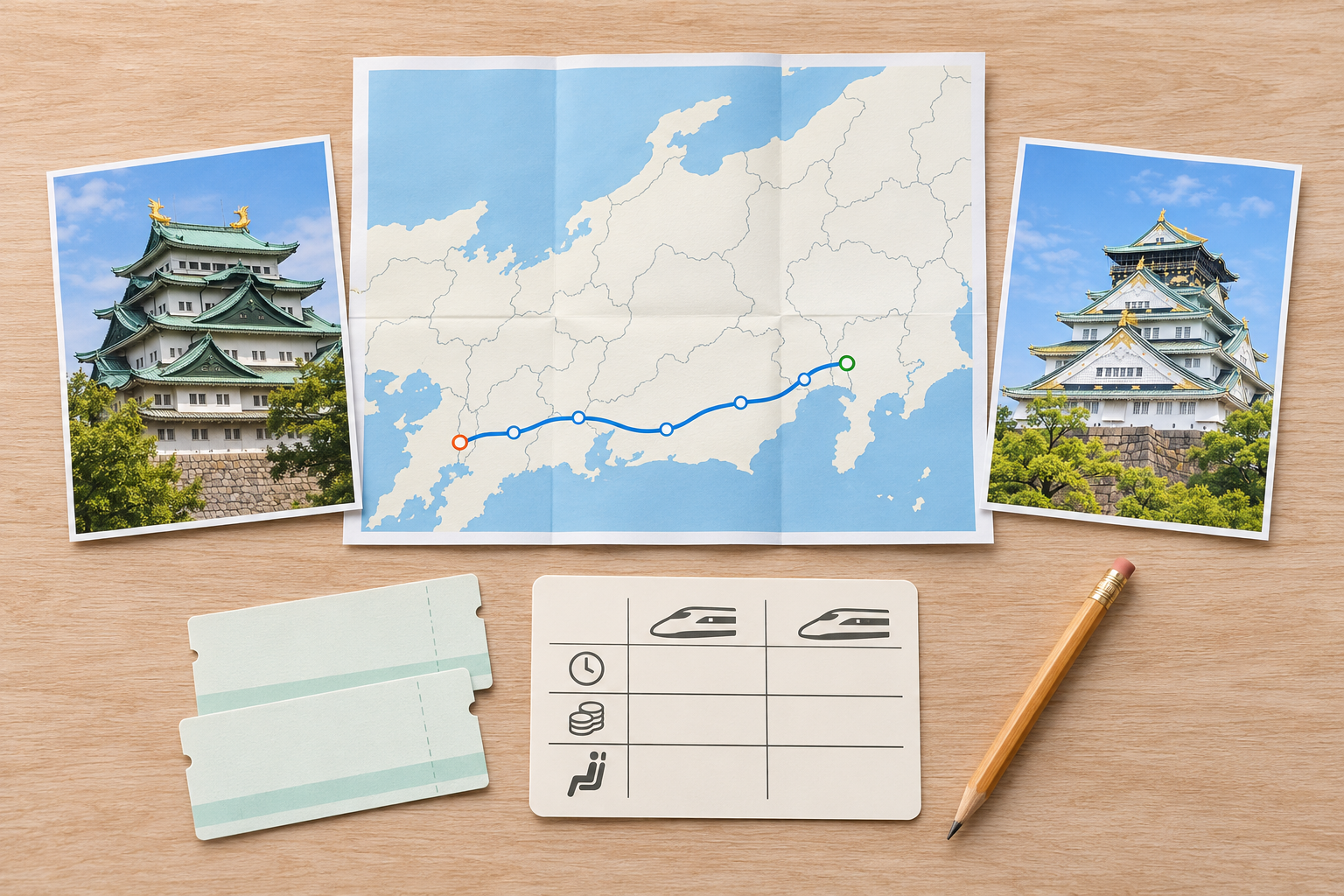
If you’re deciding nagoya vs osaka which to visit, choose Osaka for an energetic, food-focused city break with famous nightlife and easy access to Kyoto and Nara. Choose Nagoya for a more manageable urban stay, major museums and industry-related attractions, and a convenient base for exploring central Japan.
If you have time for only one, match the city to your priorities rather than assuming Osaka is automatically the better choice. Nagoya is also a practical option if you’re travelling between Tokyo and Kyoto: it sits on the Tokaido Shinkansen route, so a stop can fit into a longer journey without a major detour.
Best for Nagoya: a calmer city break, Toyota-related attractions, rail access to central Japan, and a less hectic base.
Best for Osaka: street-food districts, late evenings, big-city atmosphere, and day trips toward Kyoto, Nara or Kobe.
Skip either as a one-day stop if your plans depend on several distant attractions; travel and transfers can take a bigger share of the day than expected.
> Last checked: 8 November 2026. Official operator and destination pages were checked on this date. Fares and timetables can change; compare your exact date, train and seat on JR Central’s Shinkansen reservation site or Kintetsu Railway before booking. For Osaka local travel, check Osaka Metro.
The short comparison: what changes your decision?
| Best for | Skip if | Practical time | Typical transport cost | Official source | Caveat |
|---|---|---|---|---|---|
| Nagoya: a compact city stay, museums, industrial heritage, and onward travel through central Japan | Your main goal is famous nightlife or you want to combine several Kansai cities | Allow 1–2 days for city highlights | Nagoya–Shin-Osaka Shinkansen: compare the live fare for your date and seat on JR Central’s reservation site | JR Central | Fare depends on train, seat and booking; check the final price |
| Osaka: food districts, evening entertainment and Kansai day trips | You prefer a quieter base or have limited appetite for crowds and transfers | Allow 2–3 days for the city; add time for day trips | Local fares vary by distance; check the Osaka Metro fare guide | Osaka Metro | Popular areas can be crowded, especially at weekends and during holidays |
| Both: a trip with enough nights to move hotels and explore without rushing | You have only one night and don’t want to spend time in transit | About 50 minutes by Shinkansen between Nagoya and Shin-Osaka, train time only | Check the current fare for your chosen train and seat on JR Central’s reservation site | SmartEX | Add station access, boarding time and the journey from Shin-Osaka to your accommodation |
For a quick cost comparison, include lodging, meals, local transport and paid attractions, not just the intercity fare. Nagoya may suit travellers who want to avoid a packed sightseeing schedule; Osaka’s choice of food and entertainment can make it easy to spend more, but neither city has one fixed daily cost. Use this Nagoya travel budget guide to build a realistic budget for a Nagoya stay.
Route cards: choose the trip that fits your time
These are planning sequences, not fixed timetables. Attraction opening hours and service patterns can change by weekday, season and special event, so confirm details before travelling.
Route card A: Nagoya for one full day
Good for: travellers with a night in Nagoya, especially those arriving by Shinkansen.
1. Morning — Choose one anchor attraction. The SCMAGLEV and Railway Park is a strong option for rail enthusiasts; check its official page for current hours, closure days and admission details. Alternatively, visit Nagoya Castle grounds and plan around any areas that may be closed for maintenance or restoration.
2. Lunch — Eat near your next stop. Nagoya is known for local dishes including miso katsu and hitsumabushi. Look at current menus and prices on the day; queues and booking policies vary by restaurant.
3. Afternoon — Add one neighbourhood or museum. Osu is useful for a walk through shopping streets and temples, while the Toyota Commemorative Museum of Industry and Technology offers an indoor option. Don’t try to combine every major attraction: crossing the city takes time.
4. Evening — Stay near a station or your next departure point. Sakae works for restaurants and shopping; Nagoya Station is convenient for an early train.
The official Nagoya City tourism site lists visitor information and attraction links. The Toyota Commemorative Museum and SCMAGLEV and Railway Park publish their own visitor information. Verify each attraction’s opening days and admission before committing; some museums close on set weekdays or during maintenance.
Route card B: Osaka for two full days
Good for: visitors who want food, neighbourhood variety and time to explore after dark.
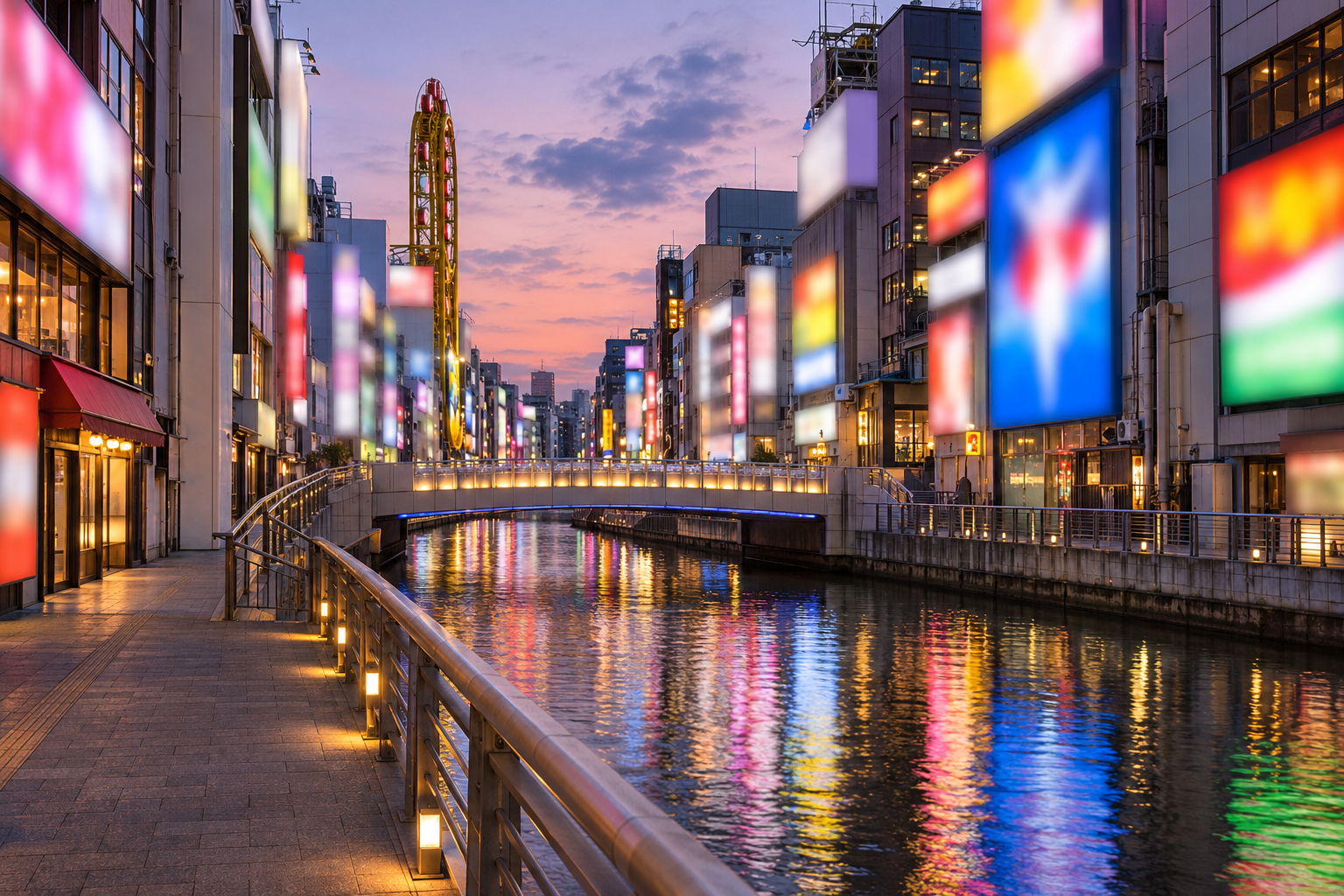
Day 1: Start around Namba or Dotonbori, then explore nearby shopping streets and choose a meal in the area. In the afternoon, pick one additional district rather than crossing the city repeatedly. End with an evening walk where you can navigate back to your accommodation by a familiar station.
Day 2: Decide between a city-focused day and a day trip. Osaka Castle Park and a museum visit can fill a city day; for a Kansai excursion, choose one destination, such as Nara or Kyoto, and check the route from your hotel. A day trip can require more time and transport planning than it looks like on a map.
Check Osaka’s official tourism guide for current visitor information. For attraction admissions, closures and booking rules, use the attraction’s own official page. Popular ticketed sights may have timed entry or date-specific booking conditions.
Route card C: Visit both cities in one trip
Good for: travellers with at least three nights to divide between the cities, or those already travelling along the Tokaido Shinkansen corridor.
1. Choose the direction that suits your wider itinerary. Tokyo–Nagoya–Osaka is a straightforward sequence on the Tokaido Shinkansen. If you’re arriving from another region, compare your onward route before choosing which city comes first.
2. Allow for the whole transfer, not just train time. Nagoya Station to Shin-Osaka takes about 50 minutes by Shinkansen, but hotel check-out, station access, waiting and the onward ride into central Osaka add time.
3. Keep the transfer day light. Plan one low-pressure activity or a meal after checking in, not a string of timed attractions.
4. Compare tickets before buying. There is no single fare to quote without choosing a travel date, train and seat type. Compare the current options and ticket conditions on JR Central’s Shinkansen reservation site before purchase; reserved seats and ticket products have different conditions.
5. Consider Kintetsu only if the route suits your plans. Kintetsu connects Nagoya and Osaka-Namba, but limited-express services have their own fare and reservation conditions. Compare the full journey, including the departure and arrival stations, rather than judging by ticket price alone.
For a Nagoya-focused schedule, see the Nagoya one-day itinerary or Nagoya two-day itinerary. They can help you check whether Nagoya deserves a full stay or works better as a shorter stop.
Costs and time: how to compare fairly
The intercity train fare is only one part of the decision. Estimate the following for each city:
- Accommodation: Compare the same dates and the same standard of room. Prices can rise during weekends, public holidays, school breaks and major events.
- Local transport: Nagoya’s main attractions are spread across different areas, so include subway or bus journeys. In Osaka, check how many trips you’ll make and whether your route is covered by a pass before buying one.
- Attractions: Some of the best parts of either city are neighbourhood walks and public spaces; museums, observation decks and special exhibitions may add admission costs.
- Meals: Decide whether you want casual meals, restaurant bookings or a mix. Osaka’s food reputation is not a promise of cheaper meals, and Nagoya has a wide range of price points too.
- Time cost: A longer commute can make a cheaper hotel less convenient. Estimate door-to-door travel to your first planned stop, not just the distance to the nearest station.
A useful rule: if your main reason for choosing Osaka is a day trip, check the door-to-door route from your actual hotel. If the destination is the priority, staying in Osaka may work; if you plan several nights outside the city, consider whether changing hotels would save time.
Getting around and choosing a base
In Nagoya, staying near Nagoya Station makes Shinkansen departures and many onward connections easier. Sakae is a good alternative if you want restaurants and shopping nearby. From Nagoya Station, allow roughly 15–25 minutes by subway or other urban transit to central areas such as Sakae, depending on the route and wait time. The Toyota Commemorative Museum is close enough to reach on foot from the station area, but check the museum’s visitor guidance for the best entrance and route.
In Osaka, Namba is convenient for food and entertainment, while accommodation near Osaka or Shin-Osaka stations may be more useful if you’re making longer rail journeys. Shin-Osaka is a Shinkansen station, not the most convenient base for every evening activity; add the onward subway ride when comparing hotels.
For either city, check the last train or bus before going out late. Station exits can be confusing, and a short distance on a map can involve a lengthy underground walk or a complicated transfer. Save your accommodation address in Japanese and keep it accessible offline.
Common mistakes and safety notes
Trying to see everything in one day. Nagoya and Osaka are both larger than their central sightseeing maps suggest. Pick one anchor attraction and one nearby area per half-day, then leave room for meals and travel.
Assuming a pass will save money. Check the routes and validity rules first. The Donichi Eco Kippu is a Nagoya weekend and holiday day-ticket option with specific conditions; confirm current eligibility, price and coverage with the operator before buying. A pass is only worthwhile if your planned trips meet its rules.
Relying on an old timetable or fare screenshot. Service changes, maintenance and seasonal schedules can affect journeys and attraction visits. Recheck official pages shortly before travel, especially around public holidays and major events.
Underestimating weather and crowds. Summer can be hot and humid, while heavy rain or typhoons can disrupt transport. Check the Japan Meteorological Agency forecast and warnings. Follow station and hotel staff instructions during disruption; don’t enter closed areas or attempt to continue a journey against official advice.
Overlooking ordinary city precautions. Keep valuables secure in busy entertainment districts, use licensed taxis or established ride options, and check the price and payment method before ordering services. Carry a payment card and some yen for smaller purchases or situations where a card is not accepted; ATMs and cash acceptance vary.
Before departure, review your government’s current travel advisory for Japan and any regional notices; advisories and entry information can change. If an emergency, serious crime or major disruption affects your safety, contact local emergency services or ask hotel staff for help. Contact your country’s embassy or consulate for consular assistance if you lose travel documents or need support beyond what local services can provide. For urgent danger, use Japan’s emergency numbers: 110 for police and 119 for fire or ambulance.
Frequently asked questions
Is Nagoya or Osaka better for a first visit to Japan?
Osaka is often a natural choice if you want food districts, nightlife and easy access to several Kansai destinations. Nagoya can be a better fit if you want a less hectic city stop, are interested in rail or industrial museums, or are travelling between Tokyo and Kyoto.
Can I visit Nagoya and Osaka as a day trip from one another?
It’s possible, but not ideal if you want to explore both cities properly. The Shinkansen takes about 50 minutes between Nagoya and Shin-Osaka before you account for station access and local transit. Choose one city for the day, or plan an overnight stay.
Which city is cheaper?
There is no dependable city-wide answer: dates, hotel choice, meals and attractions make a large difference. Compare accommodation for your travel dates and budget transport and admissions based on your actual itinerary. Use current official fares rather than old blog prices.
Should I buy a rail pass for this trip?
Not automatically. Compare the pass price and coverage with the tickets you will actually use, including any reservation requirements. Check the operator’s official terms before purchasing; coverage, validity and reservation conditions can differ by product.
Bottom line
Choose Osaka if you want a lively food-and-neighbourhood stay or plan to explore Kansai. Choose Nagoya if a manageable city stop, central-Japan access or specific museums appeal more. Choose both when your itinerary has enough nights to make the transfer worthwhile—and keep the travel day simple.