Miso Katsu in Nagoya: What to Order, Where to Go, and How to Avoid the Queue
A practical guide for international travelers on miso katsu nagoya yabaton, covering the best next steps, tradeoffs, and when to call a pro.
A practical guide for international travelers on miso katsu nagoya yabaton, covering the best next steps, tradeoffs, and when to call a pro.
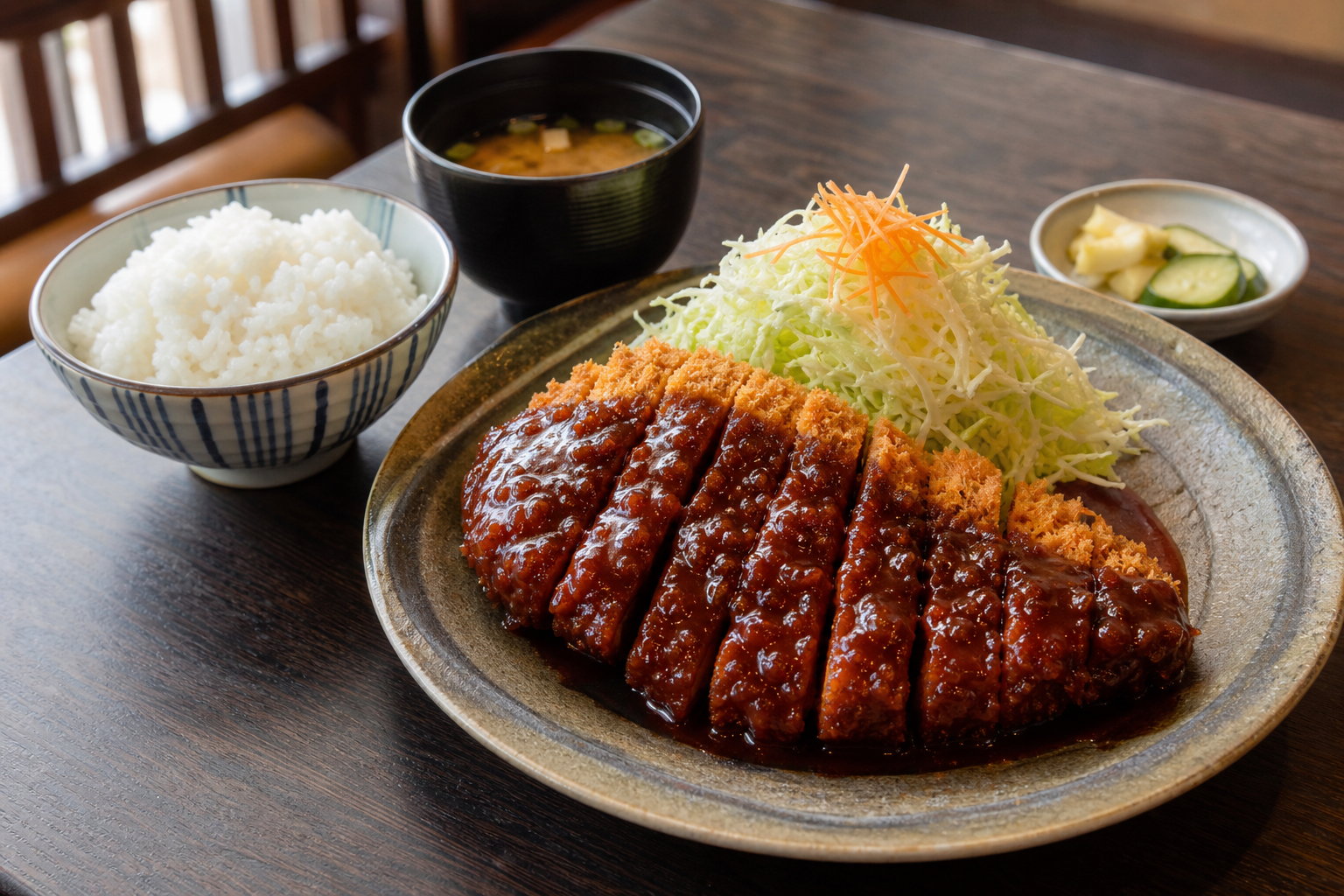
Miso katsu is Nagoya’s most direct answer to the question “What should I eat first?” It is tonkatsu—breaded, deep-fried pork cutlet—served with a dense, savory-sweet sauce built around the region’s dark soybean miso. The practical choice is not whether to try it, but which cut, serving style, and location fit your day.
For a first taste, order a standard loin cutlet set with rice, cabbage, pickles, and miso soup. Choose fillet if you prefer leaner, softer meat. Choose Yabaton’s sizzling iron-plate version only if you want a richer meal and do not mind hot sauce, steam, and a slower pace. Yabaton is the easiest benchmark because it has multiple branches and an English-language official site, but it is not the only place serving the dish.
Best for: travelers who want one recognizable Nagoya specialty, a substantial lunch, and straightforward ordering.
Skip or modify it if: you avoid pork, gluten, deep-fried food, or soybean products. The standard dish is not vegetarian, halal, or generally gluten-free.
Current-source box
> Last checked: August 1, 2026. Menu prices, branch hours, last orders, and temporary closures can change. Confirm the official Yabaton English site, the official Japanese menu, and the Nagoya tourism office’s Yabacho listing on the day you travel. The official English menu currently displays a set at ¥1,300, including miso soup, pickles, and shredded cabbage; treat that as a reference price rather than a promise for every cut, branch, or seasonal menu.
The Nagoya tourism office describes Yabaton’s sauce as using naturally brewed soybean miso fermented for 18 months. That explains the sauce’s depth, but not every restaurant uses the same recipe. Prices below are planning ranges; verify the exact branch menu before joining a line.
Quick decision table
| Choice | Best for | Typical commitment | Planning cost | Main caveat |
|---|---|---|---|---|
| Standard loin set | First-time visitors; balanced fat and crispness | 35–60 min including a normal wait | From about ¥1,300 at the official English-menu reference point | Pork fat is richer than fillet |
| Fillet set | Diners who prefer lean, tender meat | 35–60 min | Usually above the entry-level set; check current menu | Can feel less juicy than loin |
| Iron-plate miso katsu | A dramatic, very hot, sauce-heavy meal | 45–75 min | Higher than a basic set | Hot plate softens the crust; splatter risk |
| Takeaway or station branch | Tight rail connection or rainy day | 20–45 min, highly variable | Menu-dependent | Crispness declines in a closed box |
| Independent neighborhood shop | Comparing local styles | 45–90 min including navigation | Often roughly ¥1,000–¥2,000 | Less English support; cash may be useful |
Editorial judgment: use Yabaton as your baseline, not as proof that it is the only “authentic” version. Its branch coverage, standardized menu, and visitor-friendly information make it a low-risk first meal. If food is a major reason for your trip, try one independent shop later and compare sauce sweetness, thickness, and cutlet texture.
What miso katsu actually tastes like
The sauce is the defining feature. Aichi’s dark soybean miso is more concentrated and earthy than pale rice-miso soup. In a katsu sauce, it is usually balanced with sweetness and stock or other seasonings, producing something closer to a glossy savory gravy than a bowl of miso soup.
Three variables change the experience:
1. Loin versus fillet. Loin has more fat and stands up well to the forceful sauce. Fillet is leaner and easier to cut, but its flavor is milder.
2. Sauce poured over versus served separately. Sauce over the cutlet is the classic, convenient presentation, though it softens the breading. If a restaurant permits sauce on the side, that preserves more crunch.
3. Plate versus iron plate. A hot iron plate keeps everything steaming and may include cabbage beneath the cutlet. It is impressive but not automatically “better”; the lingering heat continues to soften the crust.
If you are sensitive to strong flavors, ask whether a smaller amount of sauce or sauce on the side is possible. Do not assume every branch can customize every set during a rush.
Which Yabaton location fits your itinerary?
Yabaton’s official branch directory should be the final authority, but most travelers can make the choice by area rather than by chasing a supposedly secret “best branch.”
Yabacho: choose the flagship experience
The Yabacho area is the natural choice if you are exploring central Sakae, Osu, or the shopping streets south of Sakae. The official Nagoya tourism listing identifies the Yabacho restaurant and notes that the business was established in 1947. This is the branch to choose when the restaurant itself is part of the attraction.
Route card: From Sakae, travel south toward Yabacho by subway or walk if the weather and your mobility allow. From Osu, build it into a northbound walk rather than returning to Nagoya Station. Check the exact branch pin and opening hours before departure.
Pairing it with a central-city day is simple: use the Sakae area guide to decide whether to eat before or after Oasis 21 and the shopping district. If you are walking from the west, our Fushimi area guide helps explain the quieter middle zone between Nagoya Station and Sakae.
Nagoya Station: choose convenience
A station-area branch makes more sense on an arrival, departure, or transfer day. Nagoya Station is large, and “near the station” can still mean navigating underground malls, department-store floors, or separate building entrances. Allow at least 15–20 minutes beyond your map estimate to locate a restaurant, especially with luggage.
Use our Meieki area guide before choosing a branch. The best station location is the one on the same side of the complex as your next train or hotel—not necessarily the one with the shortest straight-line distance.
Route card for a rail day: store large luggage first; locate the branch using its official building/floor information; photograph or note your return landmark; finish eating at least 30 minutes before a conventional train and considerably earlier before a reserved intercity departure.
Sakae or other branches: choose the shortest queue-compatible detour
If your schedule already places you near another official branch, do not cross the city only to eat at Yabacho. Recipe consistency is part of the chain’s appeal. A branch close to your hotel can also be a better dinner option after a long Nagoya one-day itinerary, when adding another transfer offers little value.
A queue strategy that protects your sightseeing time
The worst plan is arriving hungry at the most famous branch at the obvious lunch peak with a fixed attraction reservation immediately afterward.
Use this checklist:
- Check the official branch hours and last-order information that morning.
- Aim for an early lunch or a later meal rather than the central noon rush.
- Keep a second official branch and one unrelated nearby restaurant saved on your map.
- Do not join a long line if you have a timed museum, train, or attraction within 90 minutes.
- Put luggage in a locker or hotel storage; narrow queues and busy dining rooms are poor places for large suitcases.
- Carry a payment backup. Card and cashless acceptance can vary by location or temporarily fail.
- In summer, avoid waiting outdoors without water and shade; in severe weather, prioritize a connected station or mall branch.
A visible line does not reveal its speed. Ask staff for an estimated wait when possible. If they cannot provide one, set your own cutoff—20 or 30 minutes, for example—and leave while the rest of your day is still recoverable.
How to order without confusion
A set meal is the easiest order because it typically groups the cutlet with rice, cabbage, soup, and pickles. Pointing to the menu is acceptable, but understanding a few words helps:
| Term | Meaning | Why it matters |
|---|---|---|
| miso katsu | Cutlet with miso-based sauce | The core dish |
| rosu | Loin | Juicier and fattier |
| hire | Fillet | Leaner and tender |
| teishoku | Set meal | Usually the simplest complete order |
| tetsuban | Iron plate | Served extremely hot |
| gohan | Rice | Ask staff about refills rather than assuming |
| kyabetsu | Cabbage | Often shredded beside or beneath the cutlet |
When the plate arrives, test the temperature before taking a full bite, particularly with an iron plate. The sauce can remain hotter than it looks. Eat cabbage between bites to reset your palate, and add mustard only after tasting the sauce alone.
Dietary and safety reality check
Miso katsu presents several common dietary conflicts at once: pork, wheat in breading, soy in the sauce, and deep-frying. Shared fryers and sauce ingredients also make casual substitutions unreliable for severe allergies.
- Pork-free or halal: standard miso katsu is unsuitable. Do not infer halal status from a non-pork side dish in the same kitchen.
- Vegetarian or vegan: the cutlet is pork, and sauces or soups may include animal-derived stock.
- Gluten-free: breading normally contains wheat; sauce may also contain wheat-containing ingredients.
- Soy allergy: soybean miso is fundamental to the dish.
- Alcohol sensitivity: seasoning recipes can include cooking alcohol; ask the restaurant directly.
For a serious allergy, show a professionally translated allergy card and ask whether cross-contact can be controlled. If staff cannot confirm, choose another restaurant rather than negotiating an improvised version during service.
For general travel safety, check any current travel advisory, keep your phone charged, and enable official emergency alerts. During an earthquake, follow staff instructions, stay away from falling glass or unsecured shelves, and do not rush onto stopped trains. Typhoons, extreme heat, or heavy rain can disrupt rail service and make outdoor queues unsafe; check Japan Meteorological Agency warnings and railway notices, then choose a connected station or mall branch instead of forcing the plan.
Restaurant bill scams are not a defining risk at established miso-katsu chains, but always confirm prices on the current menu, decline unsolicited touts, and check the itemized bill before paying. Call 110 for police and 119 for fire or ambulance emergencies in Japan. Contact your embassy or consulate for serious incidents such as a lost passport, arrest, or consular emergency; routine restaurant misunderstandings should go to restaurant staff or local police rather than an embassy.
Build it into a Nagoya food plan
Miso katsu is filling. Avoid scheduling hitsumabushi, tebasaki, and another fried specialty in the same short window merely to complete a checklist. A better sequence is a light coffee breakfast, miso katsu for lunch, and a flexible evening meal. Save eel for a different day using our best hitsumabushi guide.
If you have only one day, place miso katsu where it reduces travel: Nagoya Station on a rail-heavy day, Yabacho during an Osu–Sakae route, or a hotel-adjacent branch at dinner. The restaurant should support the itinerary, not consume it.
Common mistakes
Assuming the flagship must taste dramatically better
The flagship offers history and atmosphere, but branch convenience may matter more. Treating a cross-city detour as mandatory creates needless backtracking.
Ordering the hottest, richest plate by default
The iron-plate version is photogenic and warming, but it is less crisp and can feel heavy in humid weather. A standard set is often the clearer first comparison.
Trusting an old menu screenshot
Search snippets, blog photos, and map-menu uploads age quickly. Verify price and hours on the official site, then confirm at the branch entrance.
Leaving no schedule buffer
Restaurant waits, station navigation, and payment take time. Do not put a fixed train immediately after lunch.
Treating “miso” as automatically vegetarian
The defining paste is soy-based, but the dish is pork and accompanying soup or sauce may contain animal ingredients.
FAQ
Is Yabaton worth it for a first-time visitor?
Yes, if you value predictable ordering, multiple locations, and an established benchmark. Travelers seeking a quiet neighborhood meal or a lighter dish may prefer an independent restaurant.
How much should I budget?
The official English site displayed a ¥1,300 set reference when checked in August 2026. Budget more for premium cuts, larger portions, iron-plate dishes, drinks, or updated pricing. Confirm the current branch menu.
Is miso katsu very sweet?
It can be sweeter than travelers expect from miso, but it remains deeply savory. Recipes vary. Ask for less sauce or sauce separately if available.
Can I take it onto a train?
Takeaway availability depends on the branch and item. A boxed fried cutlet loses crispness, and strongly scented food can be inconsiderate on crowded local trains. Eat in the restaurant when time permits.
Do I need a reservation?
Many casual tonkatsu meals are handled by walk-in queues, but policies vary. Check the exact branch’s official information rather than assuming reservations are accepted.
What is the best single order?
For most first-timers: a regular loin miso-katsu set. It gives the clearest contrast between fatty pork, crisp coating, dark sauce, cabbage, and rice without the extra complication of an iron plate.
Final takeaway
Choose miso katsu by route, cut, and time, not by hype. A regular loin set is the best baseline; fillet suits leaner preferences; the iron plate is a deliberate richer choice. Verify the current official menu, avoid peak-time schedule traps, and use the branch that fits the neighborhood already on your itinerary. That leaves you with a memorable Nagoya meal rather than a long queue followed by a missed train.