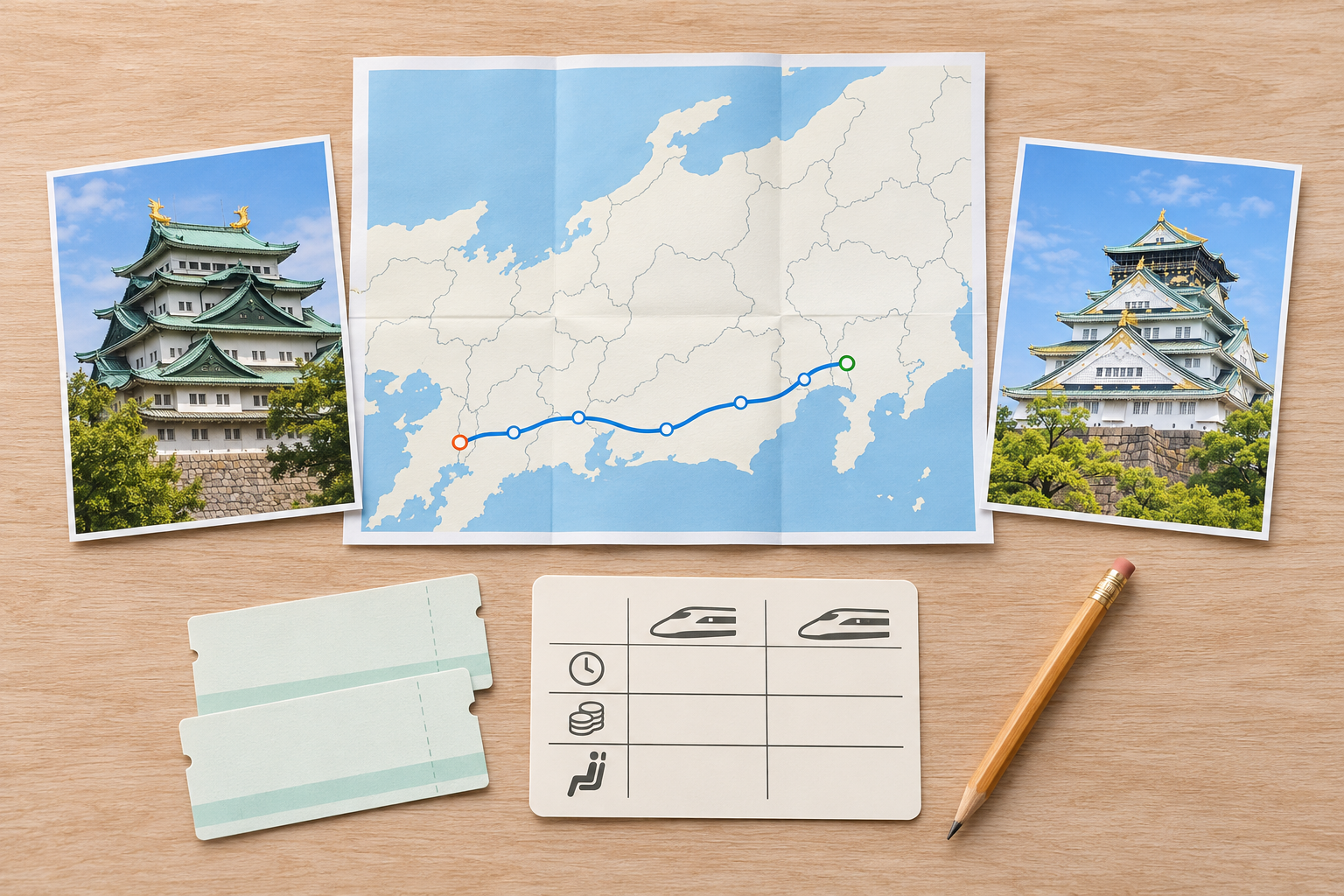
Nagoya Travel Budget Daily Cost: Build a Day-by-Day Spending Plan
A practical guide for international travelers on nagoya travel budget daily cost, covering the best next steps, tradeoffs, and when to call a pro.
A practical guide for international travelers on nagoya travel budget daily cost, covering the best next steps, tradeoffs, and when to call a pro.
Nagoya is one of the few big Japanese cities where a careful traveler can still spend like a student and a comfortable traveler can spend like a tourist in Tokyo. The gap between a ¥8,000 day and a ¥25,000 day here is set by five decisions you make before you leave the hotel: how you get in from the airport, how you move inside the city, which attractions you actually pay for, what you eat, and what tier of bed you sleep in.
This guide builds the daily cost from the bottom up, using prices we can cite: official attraction fees re-checked on 18 October 2026, the current airport rail and bus fares, and the city's pass line-up. Food and accommodation are given as planning envelopes — ranges to adjust with live prices — not as quoted rates.
Worth reading if you want a number you can defend. Skip it if you need a fixed package quote, because every figure here assumes you book the pieces yourself.
The 30-second answer
| Tier | Per person, per day | What it buys | Where it usually breaks |
|---|---|---|---|
| Lean | ¥7,000–9,000 | Hostel or cheap business hotel, konbini breakfast and lunch, one paid attraction, transport pass on movement days | A single taxi ride, or a day-trip rail fare |
| Balanced | ¥14,000–18,000 | Mid-range business hotel, two restaurant meals, two paid attractions, transport pass, coffee and snacks | Upgrading hotel tier mid-trip without re-budgeting |
| Comfort | ¥25,000+ | Full-service hotel, specialty dining, taxis for short hops, premium day trip | Airport taxi plus hotel breakfast double-counted |
On a room-share assumption, two people in a twin land roughly 20–30% per person below the solo figures for the same comfort level, because the room splits while transport and food do not.
Last checked, and what to verify yourself
Prices in Japan change quietly, usually on 1 October or 1 April. Two of the fees below moved in 2026, so anything written before that is already wrong: Nagoya Castle went to ¥1,000 for adults on 1 October 2026, and Higashiyama Zoo is at ¥800 rather than the ¥500 still circulating.
Before you travel, re-check three things: the official attraction page for the week you visit, the transport operator page for your arrival date, and your hotel's live rate for your exact dates. Everything below is a planning frame dated 18 October 2026.
Step 1 — Fix the airport transfer before anything else
Your arrival transfer is the largest fixed cost most Nagoya visitors get wrong, because the airport sits on a peninsula south of the city and the taxi option is not a small upgrade.
| Option | Adult cost | Time to central Nagoya | When it makes sense |
|---|---|---|---|
| Meitetsu limited express (μSKY or Limited Express) | ¥980 base fare | About 28–38 minutes depending on service | Default choice; the only rail option into Nagoya Station |
| μSKY first-class car (μticket) | +¥450 on top of the ¥980 | Same train, reserved first-class car | You have luggage and want a guaranteed seat |
| Airport limousine bus | ¥2,000 one way | Varies by route and traffic | Your hotel is on a served route, especially Sakae or Fushimi |
| Taxi | Around ¥16,000 reference, plus customer-paid expressway and bridge charges | Around 50 minutes in normal traffic | Late arrival with heavy bags, split four ways |
The rail fare is the anchor to plan around: ¥980 from the airport station to Nagoya Station on the Meitetsu line, with an optional ¥450 first-class ticket. Note the trap: the airport railway is Meitetsu, not JR, so a Japan Rail Pass does not cover it. If you continue by shinkansen, you still buy a Meitetsu ticket to reach Nagoya Station first.
The taxi only makes sense as a convenience purchase. Split four ways, the ¥16,000 reference is about ¥4,000 per person before expressway and bridge charges — roughly four times the rail fare — so take it for door-to-door luggage handling at midnight, not to save money. Our full route breakdown is in Centrair to Nagoya: every transfer option compared.
Step 2 — Pick one transport model for the day and stop thinking about it
Nagoya's subway and bus network is compact, and the pass decision is simple arithmetic: count your rides, then choose.
| Ticket | Adult price | Covers | Best use |
|---|---|---|---|
| Single subway ride | ¥210–330 depending on distance | One journey | Two or three rides in a day |
| Subway 24-hour ticket | ¥760 | Subway only, 24 hours from first gate use | A heavy subway day that starts in the afternoon |
| Subway & City Bus one-day ticket | ¥870 | Subway plus city bus, one service day | A day mixing subway hops with bus-only stops |
| Donichi Eco Kippu | ¥620 | Subway plus city bus, weekends and public holidays only | Saturday, Sunday or a Japanese public holiday |
The weekend pass is the one worth planning around. At ¥620 it undercuts both the ¥760 subway 24-hour ticket and the ¥870 bus-and-subway day ticket, so if your itinerary is flexible, put your museum-and-shrine day on a Saturday and your day trip on a weekday. The eligible dates, covered routes and break-even points are set out in our Donichi Eco Kippu guide.
If you are staying four days or more, an IC card removes the ticket-machine queue and gives you one clean line to reconcile at the end of the trip. manaca, Suica and Icoca all work on Nagoya subway and buses; the practical differences are where you can top up, whether a deposit is tied to the card, and which local points accrue, so check before you commit — see manaca vs Suica vs Icoca in Nagoya.
Planning envelope for transport inside the city: ¥600–900 per person per day if you move between districts, ¥300–500 if you stay in one area. Do not budget zero: Nagoya Station to Sakae, or Nagoya Station to Osu, is a ride you will take more than once.
Step 3 — Price only the attractions you will really pay for
Nagoya's advantage is that its best-known sights cluster into a handful of paid venues surrounded by free ones. A three-day trip can include one big paid attraction per day and still leave change.
| Attraction | Adult admission | Notes from the official page |
|---|---|---|
| Nagoya Castle (Hommaru Palace and Nishinomaru Okura Museum included; last entry 16:00) | ¥1,000 | Open 9:00–16:30; closed 29 December–1 January; junior high school age and younger free |
| Nagoya Castle + Tokugawaen combination ticket | ¥1,040 | Cash only at the castle ticket counter |
| Higashiyama Zoo & Botanical Garden | ¥800 (high school age and up) | Junior high school age and younger free; ¥200 is the Nagoya-resident 65+ rate, not a child ticket; closed Mondays and 29 December–1 January; open 9:00–16:50, last entry 16:30 |
| Higashiyama Zoo Sky Tower combination ticket | ¥880 | Annual passport ¥3,200 for repeat visits |
| Atsuta Jingu shrine grounds | No admission ticket | One of Japan's great shrines; the precincts are open to visitors |
| Osu shopping streets, Sakae, Meieki | Free | Spending is optional and entirely up to you |
Two adults doing castle plus zoo now spend ¥3,600, not the ¥2,000 that pre-2026 budgets assume — enough to shift a whole day's envelope. Note the zoo's Monday closure before you build a Monday around it; the castle and the zoo do not share the same closed day.
The combination logic is simple: pay for one anchor attraction per day and fill the rest with free districts. Castle in the morning plus Osu in the afternoon costs ¥1,000 in admissions. Zoo in the morning plus Sakae at night costs ¥800. A third paid attraction in the same day is usually a scheduling mistake rather than a budget one — you run out of hours before you run out of money.
Step 4 — Set a food envelope in three tiers
Nagoya's local food is cheap by Japanese big-city standards if you eat where locals eat. Tebasaki wings, miso katsu, kishimen noodles and hitsumabushi are all accessible at lunch prices, and portions are generous.
| Food tier | Per person, per day | What it looks like |
|---|---|---|
| Lean | ¥2,500–3,500 | Konbini breakfast, set lunch or noodle shop, one tebasaki plate with a drink |
| Balanced | ¥4,500–6,500 | Cafe breakfast, a proper lunch set, dinner at a casual local restaurant with one drink |
| Comfort | ¥9,000+ | Specialty hitsumabushi or yakiniku dinner, cafe stops, hotel breakfast added on |
These are envelopes, not quoted menus. A kishimen lunch and a tebasaki dinner sit at the low end; a dedicated hitsumabushi restaurant at dinner pushes a single meal past ¥4,000. What matters for planning is the shape — breakfast is where you save, dinner is where Nagoya rewards you for spending. Start with tebasaki in Nagoya for the bar-food end and work upward.
Many Nagoya restaurants are cash-friendly and some smaller counters are cash-only. Carry ¥10,000–15,000 in cash for a three-day trip and treat cards as a backup rather than the default.
Step 5 — Choose the bed tier and hold it
Accommodation is the only line that can swing ¥15,000 a night without changing your itinerary.
| Tier | Typical nightly range (verify live) | What you get |
|---|---|---|
| Hostel dorm or capsule | ¥3,000–5,500 | Shared bathroom, locker, often a common room |
| Budget business hotel | ¥7,000–11,000 | Small private room, station-adjacent, reliable |
| Mid-range business hotel | ¥12,000–18,000 | Larger room, better location in Sakae or Meieki |
| Full-service hotel | ¥22,000+ | Breakfast, service, space |
Nagoya's business hotels are the value story: station-area rooms are functional and priced well below Tokyo equivalents, which is why the balanced tier here assumes a mid-range business hotel rather than a luxury one. Our budget hotels and hostels in Nagoya comparison covers which areas trade price for walking distance, and how far from Nagoya Station you can stay before transport eats the saving.
The daily worksheet
Copy this into your notes and fill it in once, before booking:
1. Airport transfer: ¥980 (rail) or ¥2,000 (bus), each way.
2. Accommodation: nightly rate ÷ number of people sharing the room.
3. Transport inside the city: ¥620 on a weekend or public holiday, ¥760–870 on a weekday with heavy movement, ¥300–500 on a light day.
4. Attractions: sum only the paid entries you actually plan, from the table above.
5. Food: pick a tier and multiply by days. The balanced and comfort tiers already include coffee and snacks; only the lean tier needs a ¥1,500–2,000 adder for them.
6. Buffer: add 10% for the taxi you said you would not take and the souvenir you said you would not buy.
A worked three-day example for one person at the balanced tier: ¥1,960 return rail from the airport, ¥19,500 accommodation (¥6,500 per person per night sharing a ¥13,000 mid-range twin), ¥2,250 transport (one 24-hour ticket, one bus-and-subway day ticket, one weekend pass), ¥1,800 attractions (castle plus zoo), ¥18,000 food (¥6,000 a day), ¥2,500 incidentals. Total about ¥46,000 for three days, roughly ¥15,300 per day all-in. Add flights and insurance separately.
If you would rather move sliders than do arithmetic, the site's Nagoya cost calculator runs the same tiers — transport, food, attractions and accommodation — and totals them per person for your dates.
Three sample days, costed
Lean Saturday: hostel bed ¥3,500, konbini breakfast ¥500, kishimen lunch ¥900, Donichi Eco Kippu ¥620, Atsuta Jingu free, Osu browsing free, tebasaki dinner with a drink ¥2,200. Total around ¥7,700 — and the weekend pass is doing real work here.
Balanced weekday: mid-range hotel ¥13,000 shared (¥6,500 per person), cafe breakfast ¥800, lunch set ¥1,200, subway 24-hour ticket ¥760, Nagoya Castle ¥1,000, dinner ¥3,000, incidentals ¥1,000. Total around ¥14,300 per person.
Comfort day: full-service hotel ¥24,000 shared (¥12,000 per person), hotel breakfast included, taxi to the castle ¥1,500, castle plus Tokugawaen combination ¥1,040, hitsumabushi dinner ¥5,500, evening taxi ¥1,800. Total around ¥22,000 per person before shopping.
The lesson across all three: the tier is set by the room and the dinner, not by the attractions. Cutting a ¥1,000 castle saves less than moving one hotel tier.
Common mistakes that quietly break a Nagoya budget
- Planning on old attraction prices. The castle and the zoo both moved in 2026; recalculate before assuming ¥500 entries.
- Buying a pass you cannot break even on. Three subway rides do not justify a ¥870 day ticket. Count rides first, then buy.
- Ignoring the weekend pass calendar. ¥620 versus ¥870 is a 29% difference for the same city, decided purely by the date.
- Taking a taxi from Centrair by default. ¥16,000 before expressway charges is a hotel night, not a transfer.
- Booking a hotel far from a subway line to save ¥2,000 a night. Two extra rides a day often erase the saving.
- Assuming cards cover everything. Small counters and older shops still prefer cash.
- Forgetting the day-trip line item. A Takayama or Shirakawa-go day adds rail and bus fares that dwarf a city day; budget it as its own day, not as an afternoon.
- Turning up at the zoo on a Monday. It is closed, and the castle is not — check both calendars.
Safety, weather and money practicalities
Nagoya is a low-risk city for travelers, but the safety items that affect a budget are practical rather than dramatic. Typhoon season runs roughly June to October and can suspend airport rail and bus services; a disrupted arrival is exactly when people take the ¥16,000 taxi they had not budgeted. Keep one night of flexible accommodation money aside for that scenario.
Summer heat in the Nagoya basin is genuinely severe — plan indoor blocks in the middle of the day, carry water, and do not schedule a zoo morning for a 35°C afternoon. Japan sits on active fault lines, so a two-minute check of your own government's travel advisory and natural disaster guidance before you fly is worth more than any packing item. On arrival, note your hotel's evacuation route and the nearest designated shelter, and save your embassy contact in your phone next to the local emergency numbers: 110 for police, 119 for fire and ambulance.
On money: carry cash, keep a small coin case so you are not hunting for ¥100 coins at a ticket machine, and keep your IC card separate from your phone case so a dead battery does not strand you at a gate. If a machine rejects your card, the station office will usually sort it out faster than a phone call. For cash-machine specifics and foreign-card behavior, see ATM and cash in Nagoya.
FAQ
How much does a day in Nagoya cost for a budget traveler?
Around ¥7,000–9,000 per person per day: hostel or cheap business hotel, konbini and noodle meals, one modest paid attraction, and a transport pass on movement days. That excludes your flight and the airport transfer.
Is ¥15,000 a day enough for a mid-range Nagoya trip?
Yes, at the balanced tier in this guide — mid-range business hotel, two restaurant meals, one or two paid attractions, and a pass. It does not stretch to a full-service hotel or a taxi-heavy schedule.
Is the Nagoya subway day pass worth it?
At ¥760 for the subway 24-hour ticket and ¥870 for the bus-and-subway day ticket, it pays off from roughly four rides in a day. Weekend and public holiday travel changes the math: the Donichi Eco Kippu is ¥620 and covers both subway and city bus.
How much should I budget for Nagoya Castle and the zoo?
Nagoya Castle is ¥1,000 for adults with junior high school age and younger free; Higashiyama Zoo and Botanical Garden is ¥800 for adults with junior high school age and younger free. The zoo's ¥200 rate applies only to Nagoya residents aged 65 and over, and both sites changed their fees recently, so older budget posts understate them.
What is the cheapest way from Centrair airport to Nagoya?
The Meitetsu limited express at ¥980 to Nagoya Station. Add ¥450 only if you want the first-class μSKY car. The airport limousine bus at ¥2,000 is competitive if your hotel is on a served route and you value not changing trains.
How much cash should I carry in Nagoya?
¥10,000–15,000 per person for a three-day city stay is a workable float, with cards as backup. Many places accept cards, but small restaurants, shrine stalls and older shops may not.
Do I need a rail pass for Nagoya?
Only if your trip includes long-distance shinkansen legs. The airport line is Meitetsu, not JR, so a Japan Rail Pass does not cover your Centrair transfer, and city subway travel is better handled with an IC card or a day pass.
Official sources and evidence limits
- Nagoya Castle — Visitor Information (official English site), fetched 18 October 2026: adult ¥1,000, junior high school age and younger free, 9:00–16:30 with last entrance 16:00, closed 29 December–1 January, Tokugawaen combination ticket ¥1,040 cash only, one-year pass ¥4,000. The page carries a notice that admission fees changed on 1 October 2026.
- Higashiyama Zoo & Botanical Garden — 開園時間・休園日・入園料 (official page), fetched 18 October 2026: adult (high school age and up) ¥800, Nagoya-resident 65+ ¥200, junior high school age and younger free, annual passport ¥3,200, Sky Tower combination ticket ¥880, closed Mondays and 29 December–1 January, open 9:00–16:50 with last entry 16:30.
- Meitetsu — official airport access page and fare/time diagram, re-fetched 18 October 2026: ¥980 from the airport station (TA24) to Nagoya (NH36), μticket first-class supplement ¥450, μSKY about 29 minutes and Limited Express about 38 minutes on the operator diagram. The airport's own page states a fastest μSKY journey of 28 minutes; the 28–38 minute range is retained rather than picking one number.
- Meitetsu Bus — airport limousine page, checked 17 October 2026: ¥2,000 adult one-way, Sakae and Fushimi hotel route, with a timetable revision announced for 1 November 2026. Re-check the operator for your date.
- Centrair — official taxi guide, checked 17 October 2026: roughly ¥16,000 and 50 minutes to Nagoya Station as a reference estimate, with expressway and bridge charges paid by the passenger. Not a live quote.
- City pass prices — ¥760 subway 24-hour ticket, ¥870 subway-and-bus one-day ticket, ¥620 weekend and public holiday Donichi Eco Kippu, singles ¥210–330. These follow the Nagoya City Transport Bureau ticket and fare pages but were not independently re-read as static text on 18 October 2026, so confirm the exact figure at a ticket machine or station office before buying.
- Food and accommodation ranges are editorial planning envelopes for 2026, not survey data or quoted rates. Substitute live hotel rates and menu prices for your dates.
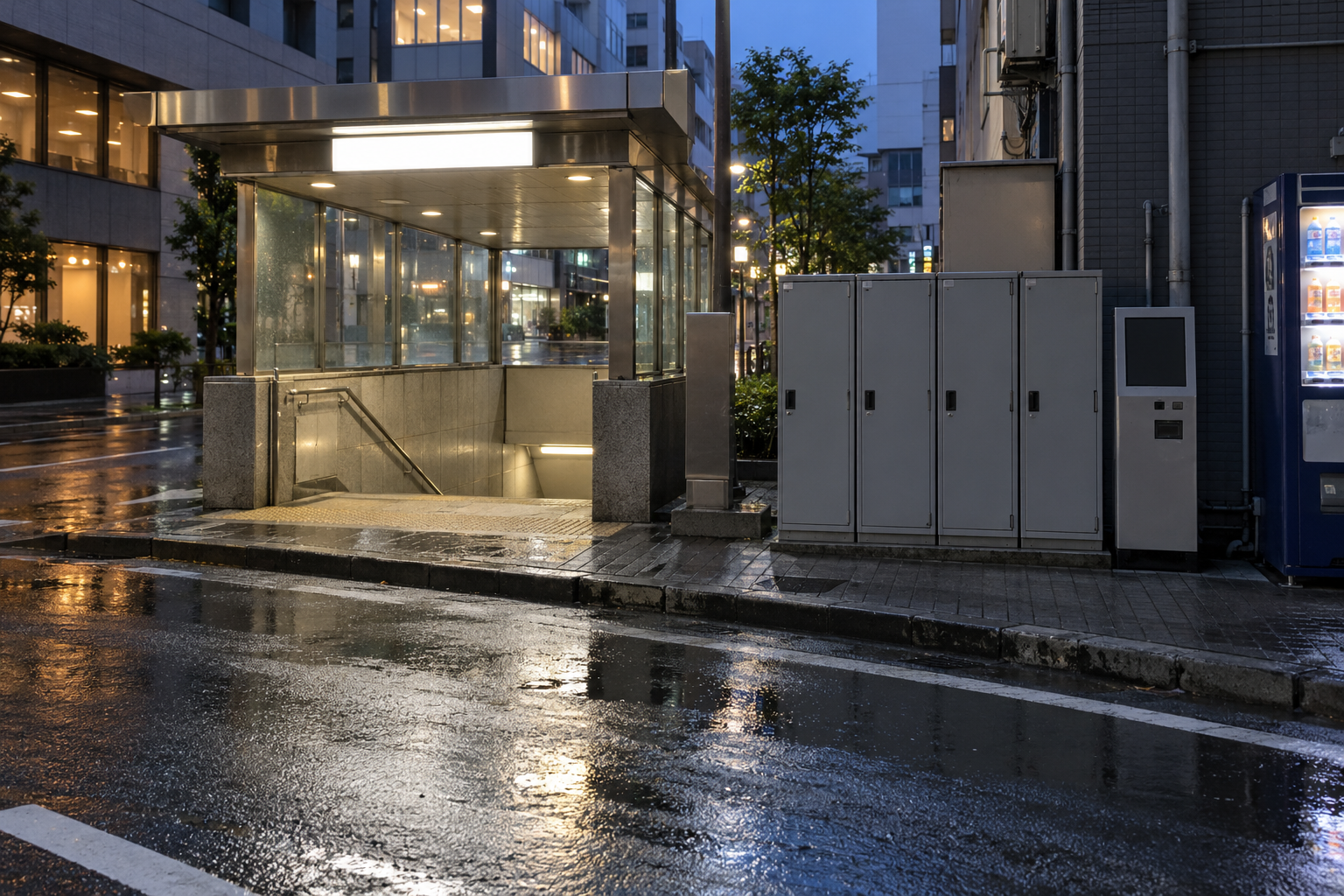
This is desk-researched budget guidance, not a claim of a recent field visit or a quote from any operator. The hero image is an AI-generated conceptual illustration of a Nagoya street scene, not a documentary photograph.
Nagoya travel budget daily cost for 2026: verified castle, zoo and airport fares, three spending tiers, and a copyable daily worksheet.