Kishimen Nagoya: A Practical Nagoya Station Noodle Guide
A practical guide to eating Nagoya’s flat kishimen noodles in and around Nagoya Station, with route cards, shop tradeoffs, ordering help, and current official sources.
A practical guide to eating Nagoya’s flat kishimen noodles in and around Nagoya Station, with route cards, shop tradeoffs, ordering help, and current official sources.
Kishimen is one of the easiest Nagoya specialties to fit into a travel day. The noodles are broad and flat, the classic broth is usually light enough for breakfast or a quick lunch, and several useful options sit inside or beside Nagoya Station. The difficult part is not finding a bowl. It is choosing a shop that matches your ticket, luggage, transfer time, and appetite.
This guide is for travelers who want a reliable bowl near the station without turning lunch into a navigation project. If you are arriving from the airport, first use our Centrair-to-Nagoya route guide to choose the correct station side.
> Current-source box — checked August 1, 2026
> Prices, menus, and hours can change. Confirm the same day before making a special trip. Primary references: Visit Nagoya’s Kishimen Yoshida listing, Visit Nagoya’s introduction to Nagoya food, ESCA’s official shop guide, ESCA’s official hours page, and JR Central’s official station maps. Visit Nagoya describes kishimen as long, flat noodles in soup. Its Yoshida listing confirms house-made broth and a chewy, firm noodle style. ESCA currently lists general retail hours of 10:00–20:30 while restaurant hours vary by shop.
The fast decision: where should you eat?
| Your situation | Best first choice | Why | Main caveat |
|---|---|---|---|
| You are already behind JR ticket gates | A platform kishimen stand, if one is open on your route | Fastest; no detour through the concourse | Access depends on having a valid ticket and using the relevant platform |
| You are outside the gates near the Shinkansen side | Kishimen Yoshida or Kishimentei in ESCA | Seated meal, broader menu, easy to find from the Taiko-dori side | Restaurant queues and individual hours vary |
| You have large luggage | ESCA restaurant after using a locker or hotel storage | More space and less platform pressure | Do not block narrow aisles with bags |
| You want the simplest traditional first bowl | Hot kishimen with a basic topping | Lets you notice the flat noodle and dashi broth | Broth and garnish vary by shop |
| You need allergen certainty | A staffed restaurant with time to ask | Better chance to discuss broth and toppings | Kishimen is wheat; broth commonly contains fish and soy components |
Editorial judgment: choose convenience over reputation. A good bowl that fits your actual train path is better than crossing the station for a famous stand and risking your connection. Travelers with less than 35 minutes should eat only if the shop is directly on their route and has no meaningful queue.
What kishimen tastes like
Kishimen is not simply ordinary udon flattened for appearance. Its width changes the eating experience: more surface touches the broth, the noodle cools quickly, and the texture feels silky even when it retains a little chew. Visit Nagoya presents it as a longstanding local food rather than a novelty dish.
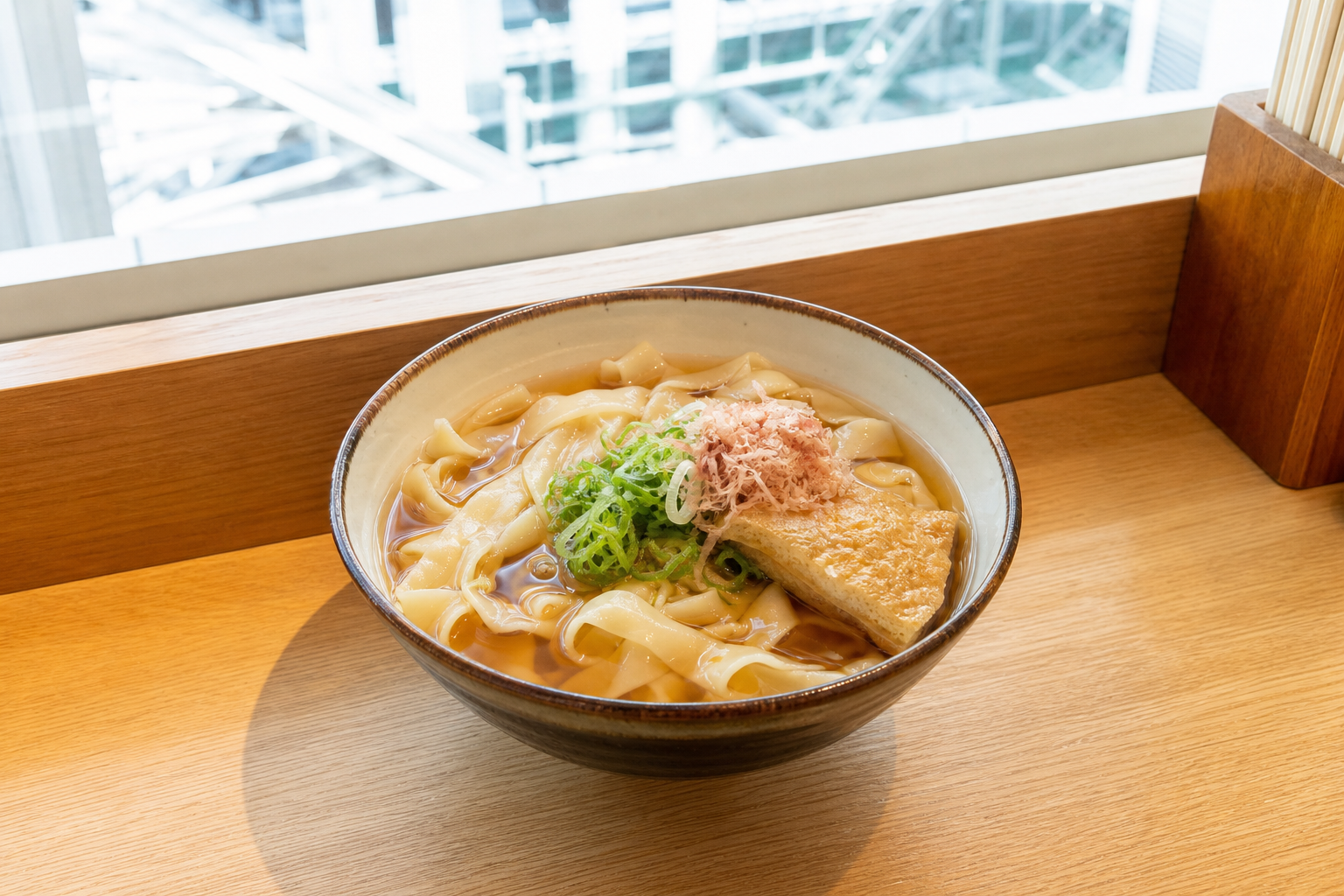
A classic hot bowl commonly pairs the noodles with a soy-and-dashi broth, sliced fish cake, green onion, and fluttering bonito flakes. Exact recipes differ. Some bowls are darker and more soy-forward; others emphasize dashi. Cold versions, curry versions, tempura toppings, and miso preparations are also common. If this is your first bowl, avoid burying it under several rich toppings. Start simple, then add tempura or meat if you need a full meal.
Route card 1: JR platform stands
Best for: a solo traveler or couple already transferring within JR gates.
Time budget: allow about 15–25 minutes from joining the queue to leaving; keep a larger margin before a reserved train.
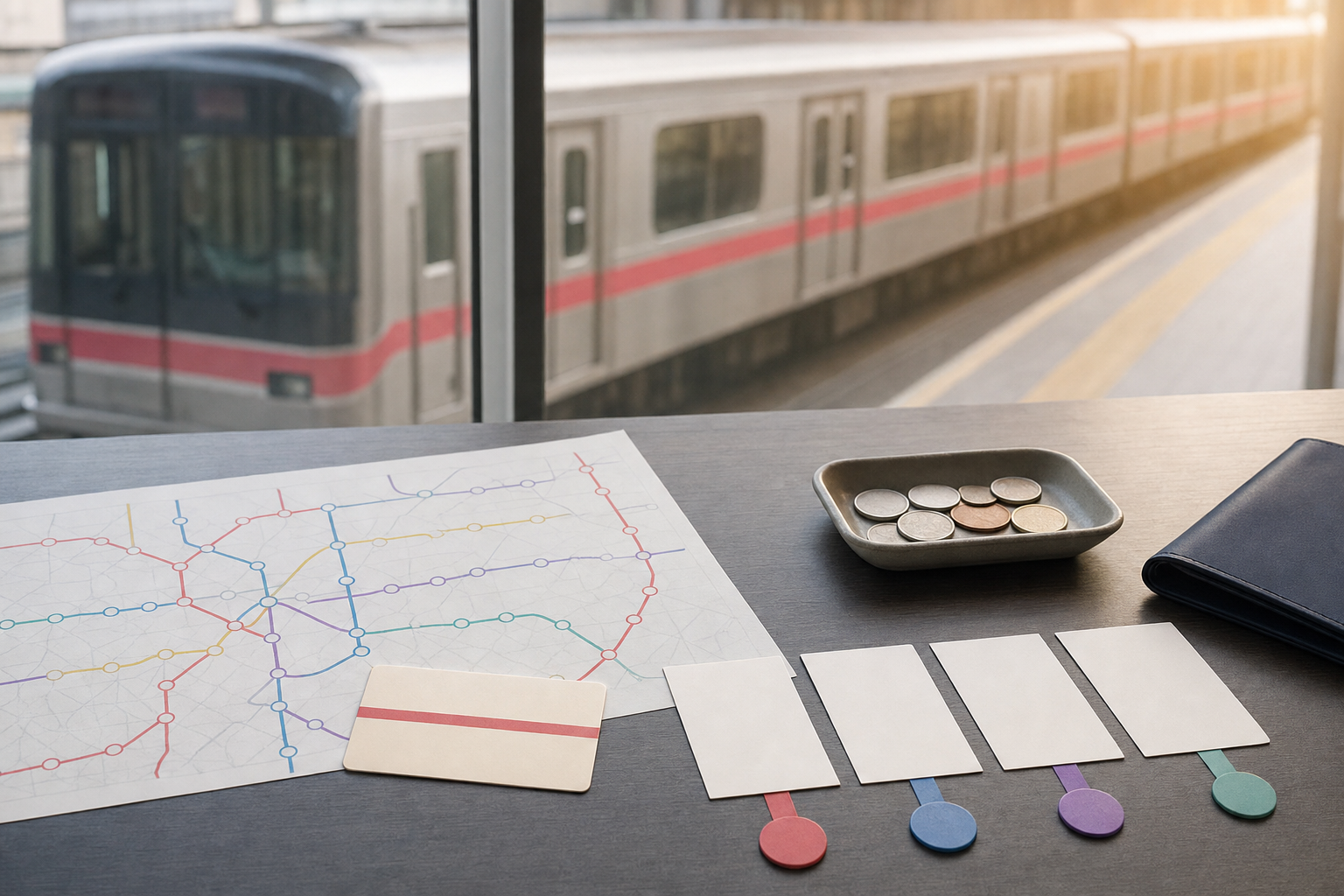
Navigation: check your platform number on the departure board, then use the official JR Central Nagoya Station map. Do not enter a platform merely because a noodle stand is there; confirm that your ticket and route permit access.
Platform shops are often standing counters with compact ordering. Decide before reaching the machine or cashier, keep your ticket secure, and move luggage out of the flow. If your train is boarding, skip the bowl. Railway operations, platform access, and shop opening can change independently.
The practical advantage is speed, not comfort. These counters are a poor fit for families arranging several bags, visitors who need a long allergen conversation, or anyone who wants to linger. They are excellent when you are already in the paid area and know exactly how much transfer time remains.
Route card 2: ESCA from the Taiko-dori side
Best for: travelers outside the gates, Shinkansen arrivals, and diners who want a seat.
Time budget: roughly 35–60 minutes, plus a buffer at lunch or dinner.
Route: follow signs for the Taiko-dori Exit on the west/Shinkansen side of Nagoya Station, then descend into ESCA. Use ESCA’s official access information and shop directory rather than relying on an old screenshot.
Two specialist names shown in the official ESCA directory are Kishimen Yoshida and Kishimentei. Yoshida is also listed by Visit Nagoya, which highlights its handcrafted noodles and in-house broth preparation. The tourism listing says souvenirs are available in the shop, useful if you want noodles to take home rather than another restaurant meal.
ESCA’s official information page currently gives center-wide ranges but explicitly says restaurant hours differ. Check the individual shop page on the day. A center being open does not prove a particular kitchen is taking orders.
Shop-choice matrix
| Choice | Atmosphere | Menu flexibility | Best traveler | Skip it when |
|---|---|---|---|---|
| JR platform counter | Fast, compact, often standing | Usually focused | You have a straightforward JR transfer | You have bulky luggage, children needing seats, or an imminent departure |
| Kishimen Yoshida, ESCA | Seated specialist restaurant | Broad enough for a deliberate meal | You want noodles and broth to be the focus | You cannot spare time for a possible restaurant queue |
| Kishimentei, ESCA | Traditional specialist alternative | Useful for comparing preparations | Your group wants a seated Nagoya-food stop | You are on the opposite station side with a tight transfer |
| General Nagoya-food restaurant | Conventional table meal | Often widest for mixed groups | Not everyone wants kishimen | You specifically want a noodle specialist experience |
For a wider station orientation before choosing a side, use our Meieki area guide. If you plan to continue shopping and street-food grazing afterward, our Osu guide is a better place to build the rest of the afternoon.
Price and time planner
Treat these as planning ranges, not guaranteed menu prices. A basic bowl near a major station will usually be the low-cost choice; tempura, meat, sets, and larger portions cost more. Official listed examples elsewhere in Nagoya show how toppings move the total: Visit Nagoya’s Miya Kishimen Ihyoe listing currently shows examples from ¥880 for Miya Kishimen to ¥1,250 for a chicken-and-egg miso-nikomi kishimen. That is a useful city benchmark, not a Nagoya Station menu quote.
| Plan | Food budget per person | Door-to-door meal time | What to order |
|---|---|---|---|
| Fast snack | About ¥600–¥1,000 | 15–25 min | Basic hot or cold bowl |
| Seated specialist lunch | About ¥900–¥1,600 | 35–60 min | Signature bowl or one topping |
| Full set meal | About ¥1,300–¥2,200 | 45–75 min | Noodles plus rice, tempura, or side dish |
Verify the displayed price before buying. Carry a physical payment fallback: station-area businesses increasingly accept cashless payment, but machine and card acceptance can differ by counter.
How to order without holding up the line
At a ticket machine, select the dish first, pay, take the meal ticket and change, then hand the ticket to staff. At a cashier counter, point to the exact menu item if pronunciation is difficult. Useful words include:
| Japanese | Reading | Meaning |
|---|---|---|
| きしめん | kishimen | Flat wheat noodles |
| 温かい | atatakai | Hot |
| 冷たい | tsumetai | Cold |
| 大盛り | ōmori | Large serving |
| かき揚げ | kakiage | Mixed tempura fritter |
| 卵 | tamago | Egg |
| ねぎ抜き | negi nuki | No green onion |
| 現金 | genkin | Cash |
A polite, compact order is enough: “Kishimen hitotsu, onegaishimasu” means “One kishimen, please.” Do not assume “no meat” makes the broth vegetarian.
Safety and dietary checklist
- Wheat: kishimen is a wheat noodle and is unsuitable for a wheat-free diet.
- Fish: dashi often uses bonito or other fish ingredients; ask rather than guessing.
- Soy: broth and seasoning commonly include soy sauce.
- Cross-contact: a shared kitchen or fryer may handle shrimp, egg, wheat, and other allergens.
- Heat: broth can be very hot, especially at a crowded standing counter.
- Luggage: use a locker or accommodation storage instead of creating a trip hazard.
- Transfer buffer: finish eating before boarding begins; never run with a hot bowl or open drink.
Staff may not be able to guarantee an allergy-safe meal in English. People with severe allergies should carry a Japanese allergy card and choose a setting where staff have time to check.
Build kishimen into a Nagoya food plan
Kishimen works best as the light noodle slot in a day that includes richer Nagoya dishes. For example, have kishimen after arrival, then save a heavier dinner for miso katsu or tebasaki chicken wings. For another carefully planned local specialty, compare our hitsumabushi guide.
Avoid trying four specialties in one rushed meal. Kishimen’s appeal is partly its restraint: noodle texture, broth, and a few toppings. Give it at least one focused bowl rather than treating it as a box to tick between trains.
Mistakes to avoid
1. Crossing the entire station for a name you saw online. Choose by your current gate and exit.
2. Assuming every platform shop is accessible. Ticket rules and train routes matter.
3. Trusting old operating hours. Check the official shop or center page that day.
4. Taking large luggage into a narrow standing counter. Store it first.
5. Treating dashi as vegetarian. Ask about fish and other allergens.
6. Scheduling lunch inside a short connection. Nagoya Station is large, and navigation takes longer on a first visit.
Food safety, travel advisories, and allergy boundaries
Check current travel advisory and natural disaster guidance for Aichi before departure, especially during typhoon season, and use normal food-safety precautions when eating kishimen. Tell staff about allergies before ordering: wheat is fundamental to the noodles, soy is common in the broth, and fish-derived dashi is typical even when a bowl looks vegetarian. Cross-contact can occur in compact station kitchens, so travelers with severe allergies should not rely on visual inspection or an automated translation alone; if staff cannot confirm the ingredients and preparation clearly, choose another meal. Let very hot broth cool before eating, supervise children with long noodles, and seek urgent medical help for breathing difficulty or another severe allergic reaction.
FAQ
Is kishimen the same as udon?
Both are wheat noodles, but kishimen is characteristically broad and flat. That shape changes the texture and how the broth coats each strand.
Can I eat kishimen without entering the JR gates?
Yes. ESCA, beside the Taiko-dori/Shinkansen side, lists specialist restaurants accessible outside the JR paid area.
Is there a best platform for kishimen?
Platform tenants and access can change, and the practical answer depends on your train. Use the current JR Central station map and departure boards; do not select a platform solely for food.
How much time should I allow?
Allow at least 15–25 minutes for a directly accessible counter with little queue, or 35–60 minutes for a seated restaurant. Add a conservative train buffer.
Is kishimen vegetarian?
Not automatically. The noodle itself is wheat-based, but broth commonly contains fish-derived dashi and soy. Confirm ingredients with the shop.
What should a first-timer order?
Choose a basic hot kishimen or one with a single familiar topping. It gives you the clearest sense of the noodle texture and broth before trying richer variations.
Final takeaway
The best Nagoya Station kishimen is the bowl that fits your route safely. Inside JR gates, a platform counter can turn a transfer into a memorable local meal. Outside the gates, ESCA’s specialist restaurants give you seats, more menu choice, and easier access with a flexible schedule. Check official hours, keep a real train buffer, order simply, and let the flat noodle and broth—not a frantic station crossing—be the experience.